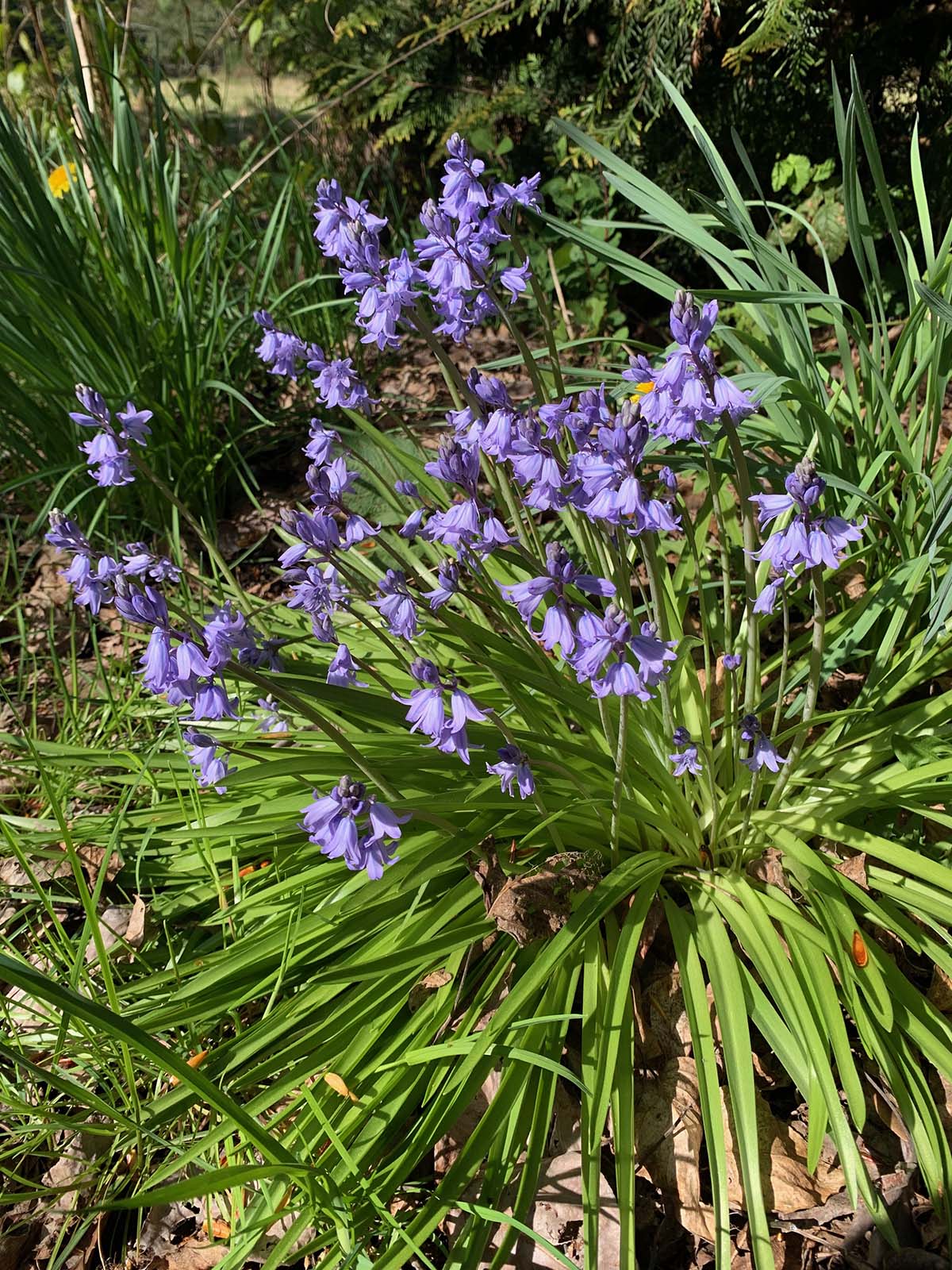
A charming, highly sentimental plant for anyone from the British Isles, this flower is an invasive species on Vancouver Island and the Lower Mainland. There are two types of bluebells: English (Hyacinthoides non-scripta) and Spanish (Hyacinthoides hispanica); both bloom mid-to-late spring and spread by seed and bulb, and both spread quickly and aggressively.
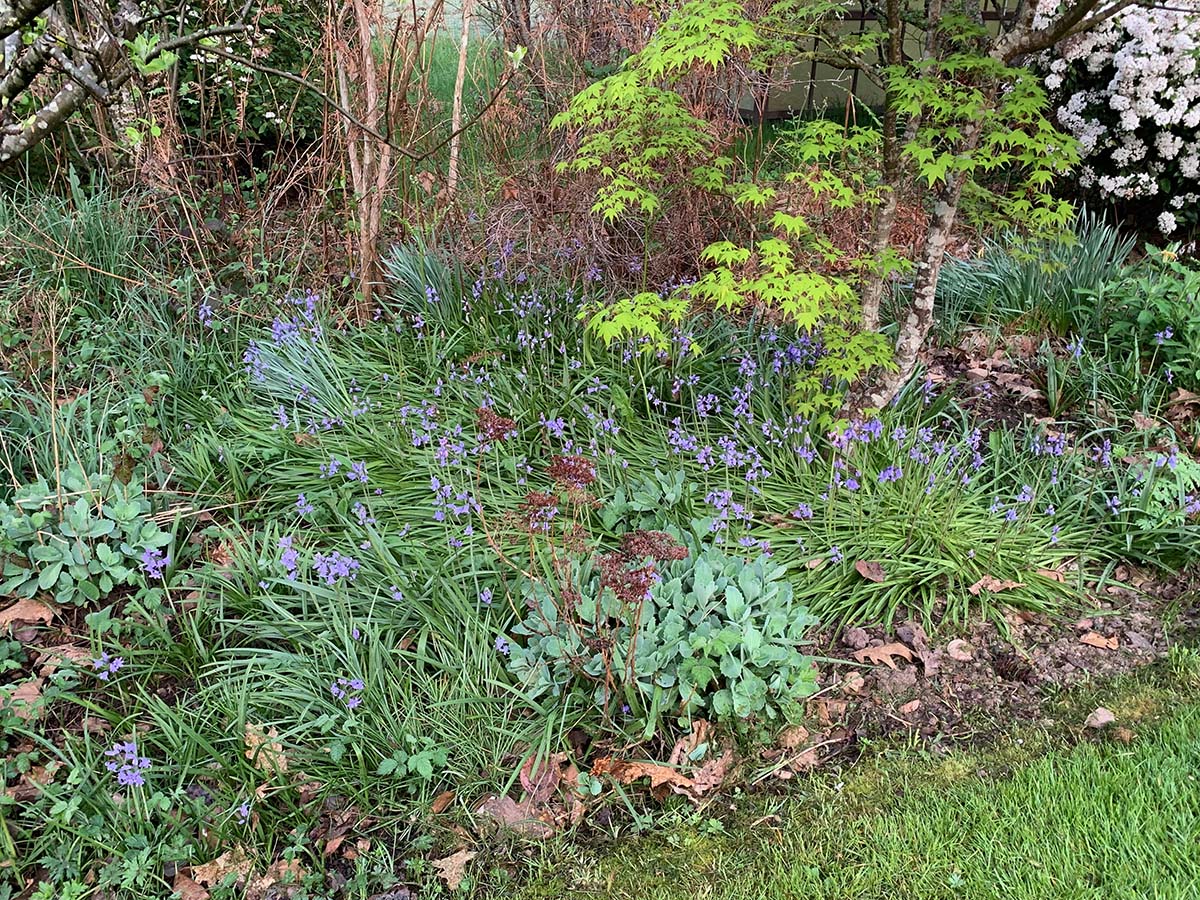
I am currently attempting to remove bluebells from my garden, and it’s a battle! Bluebells have many leaves, which smother small plants around them in spring. Their leaves die back by mid-summer, and I have been fooled into planting seeds or seedlings into the exposed soil this creates, only to have the cycle repeat itself the following spring.
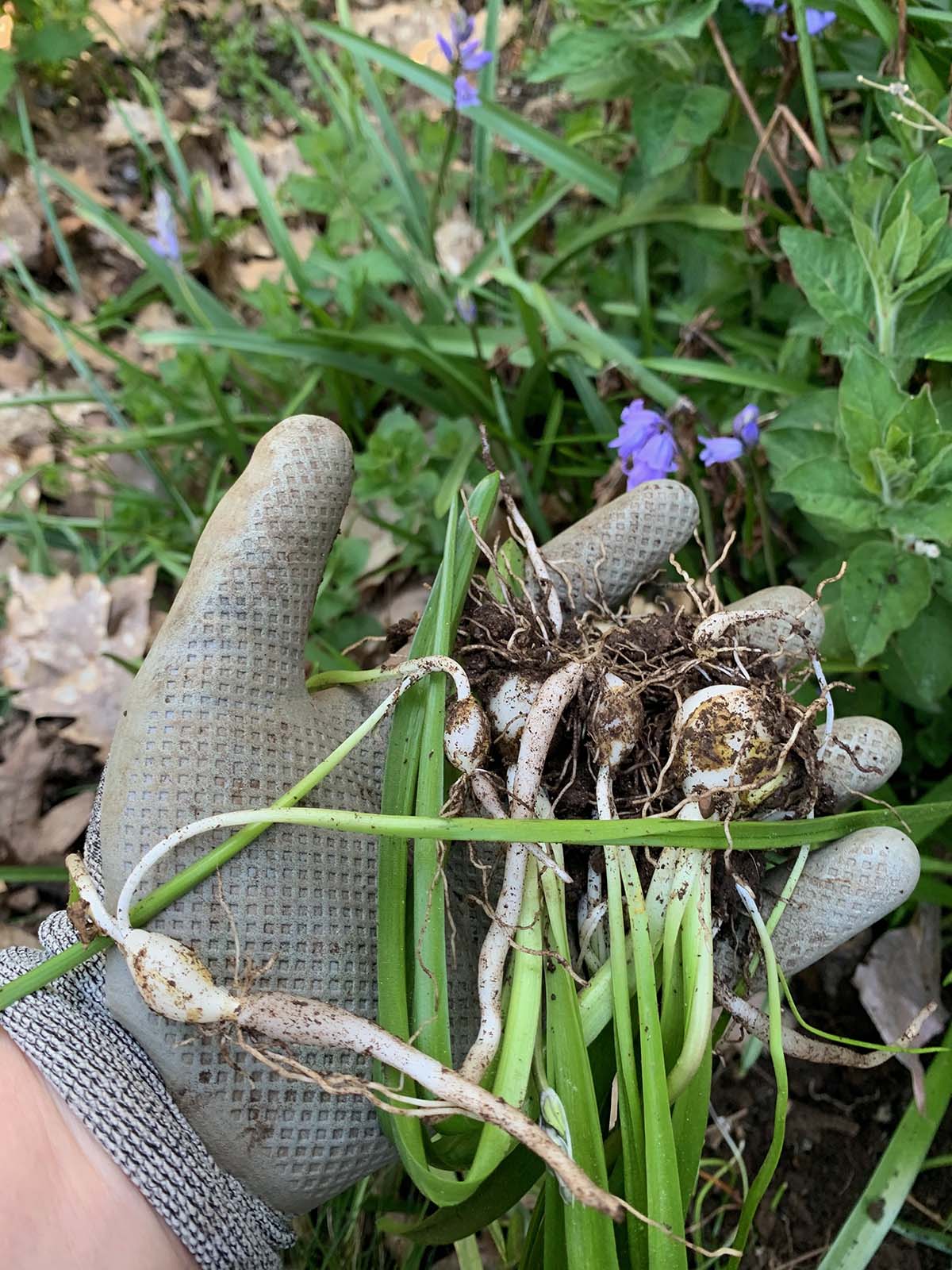
Also, the leaves detach easily from the bulbs, indicating a long history with ruminant animals, allowing bluebells to survive repeated grazing. Thus the bulbs persist, and regardless of size, they heartily sprout new leaves in spring. Removal by garden fork and trowel can take years to ensure all of the bulbs have been removed. They are even known to grow through landscape fabric!
Both species of bluebells threaten native ecosystems in B.C. They have detrimental impacts on local wildlife, and can out compete native flora in woodlands, meadows, and roadsides, including the Common Camas.
Although the province of B.C. lists Spanish bluebells as an invasive terrestrial species on their website, surprisingly it does not list English bluebells, and neither of them are listed with the Invasive Species Council of B.C.
Although both flowers are very similar, a closer look reveals some differences.
| Spanish Bluebells | English Bluebells | |
|---|---|---|
| Colour | Pale blue, pink, or white | Deep violet-blue |
| Shape | Open bell | Narrow bell |
| Flowers | Flowers on both sides | Flowers on one side |
| Stem | Upright stems | Drooping stems |
| Leaves | Wide, around 1.2 inches (3 cm) | Narrow, around 0.6 inches (1.5 cm) |
| Scent | No fragrance | Light, sweet scent |
Native Alternatives
To support biodiversity, consider planting native alternatives like the Common Camas (Camassia quamash), Great Camas (Camas leichtlinii), Harebell (Campanula rotundifolia), Coast Penstemon (Penstemon serrulatus) or Small-flowered Penstemon (Penstemon procerus).
Leave a Reply