
Beaked Hazelnut
Deciduous nut-producing shrub
Common Names: Western Hazelnut, California Hazelnut
Species: Corylus cornuta var. californica; also known as Corylus californica
Family: Betulaceae
Zone: 5-8
BEC Zones: ICH, BG, BWBS, CDF, CWH, ESSF, IDF, MS, PP, SBPS, SBS
Height: 1-5 metres
Width: 1.5-4 metres
Conditions
Sun: Sun to part shade.
Soil: Well-drained, medium-textured soils, such as sandy loam or loam. Calcium- and nitrogen-rich soils with a circumneutral to slightly acidic pH.
Moisture: Good drainage is essential; beaked hazelnut dislikes standing water or anaerobic (oxygen-deprived) conditions. Mesic to dry soil.
Exposure: Low to middle elevations; in open forest, shady openings, thickets, clearings, rocky slopes and well-drained streamside habitats.
Range: Native range extends from British Columbia, south through the Coast and Cascade ranges, to the Sierra Nevada of California.
Appearance
Shape & Stem: Many stems, densely clumped or spreading widely by suckers. Twigs, leaves and bud scales covered in long white hairs when young; hairless after the first season.
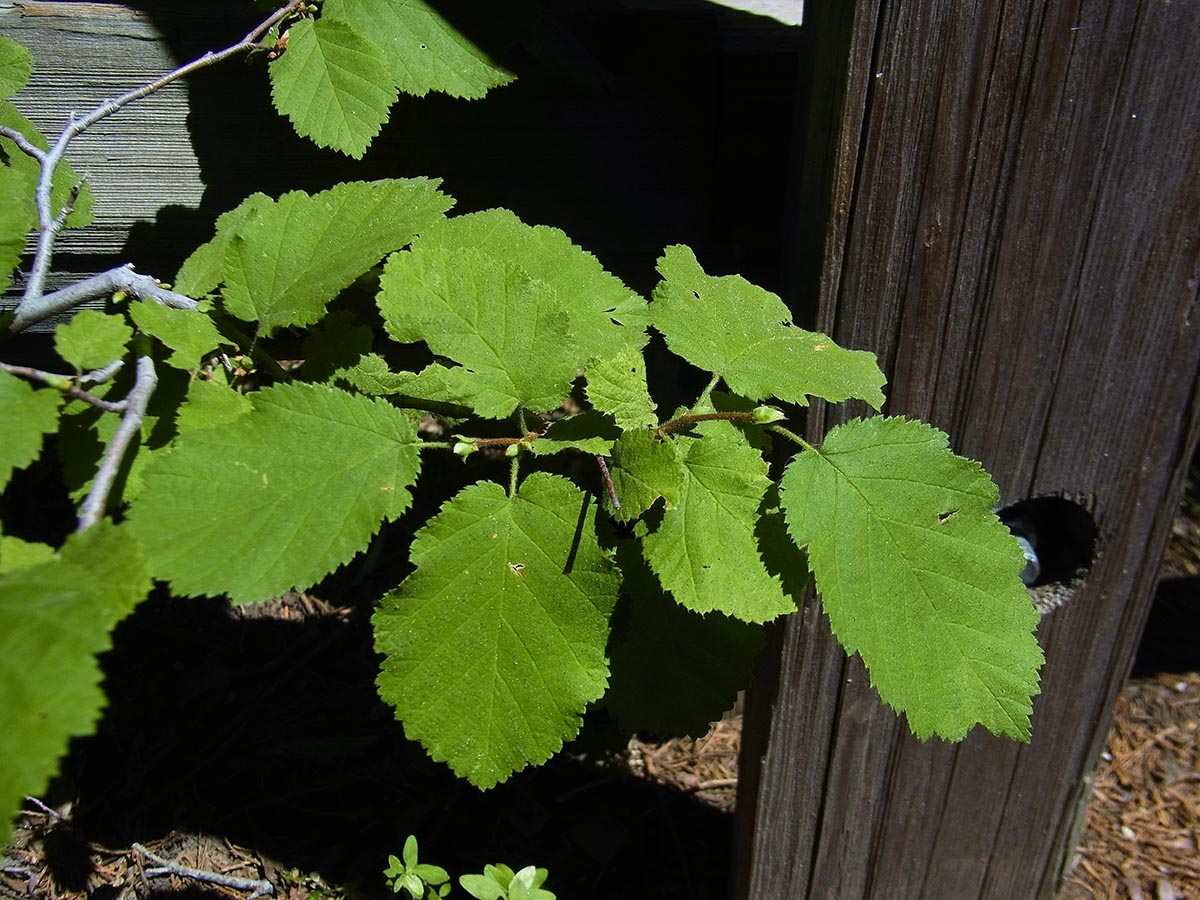
Leaf: Alternate, elliptic to oval with heart-shaped base and sharp-pointed tip, doubly saw-toothed, paler below than above, yellow in autumn.
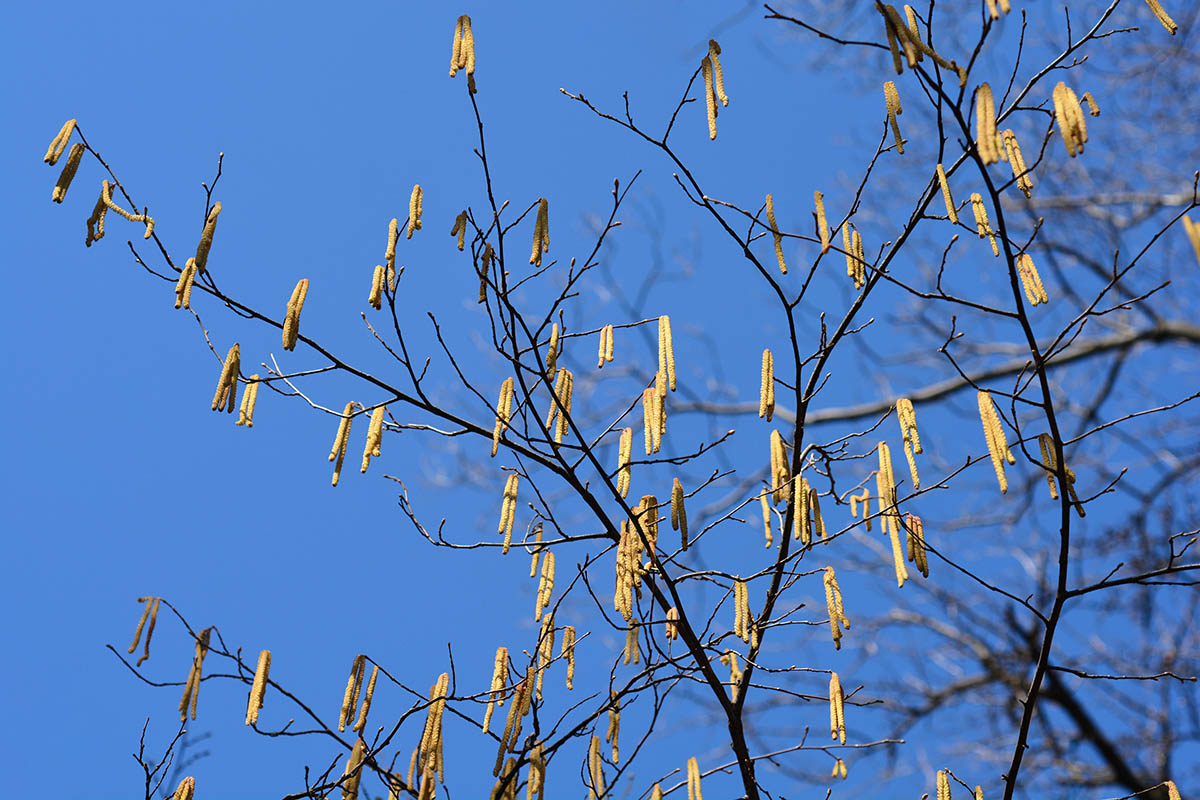
Flower: Male flowers in catkins in spring, before leaves. Female catkins feature very tiny, bright red, thread-like stigmas blooming at the same time as the male flowers in spring. Wind pollinated.
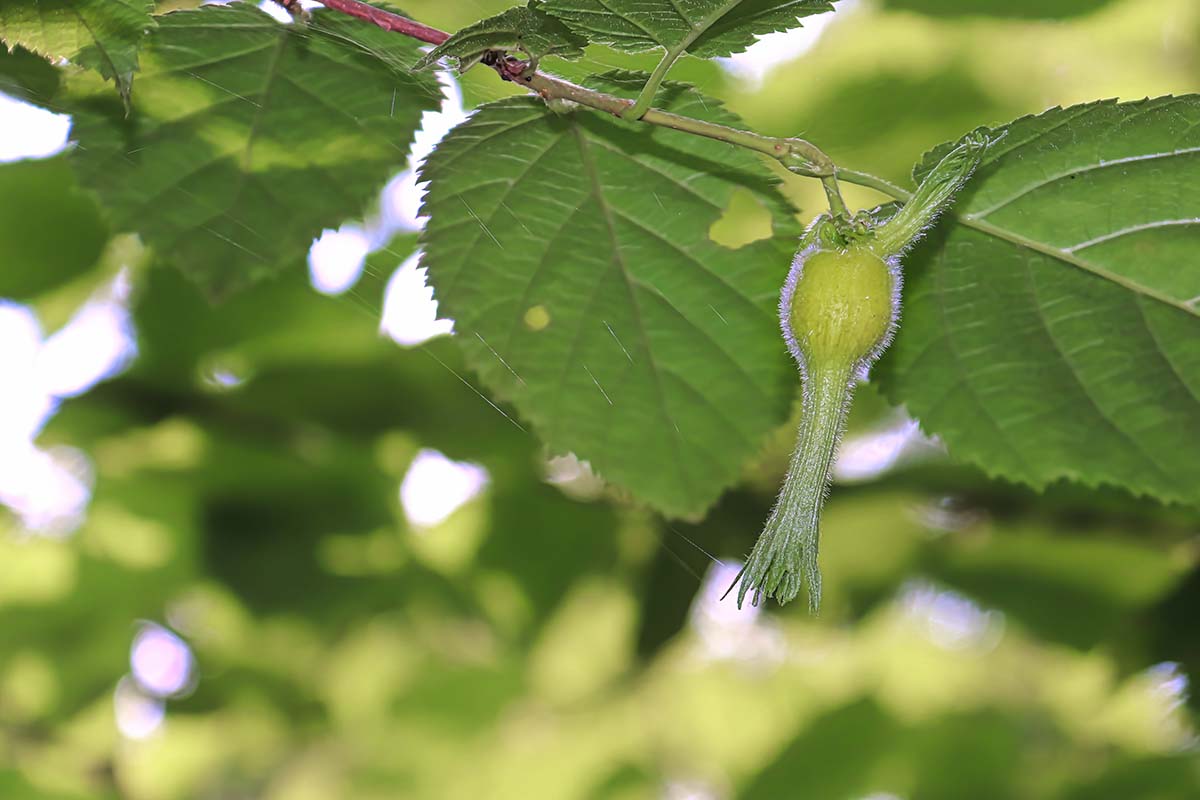
Fruits: Spherical, edible nuts enclosed in tubular light-green husks covered in stiff prickly hairs that project beyond the nut, forming a beak shape. Fruits in clusters of 2 or 3 at branch ends.
Bloom: February to April.
More Information
Maintenance & Pruning: Pruning helps maintain its shape, promotes healthy fruit production, and controls its tendency to spread via suckers. Prune while the plant is dormant (January to March) before new leaves emerge. This minimizes stress and makes the branch structure easy to see. Avoid late summer pruning as this can stimulate tender new growth that will get damaged by frost. Thinning out branches that cross or rub against each other keeps the center of the shrub open, allowing sunlight and airflow to reach the inner branches, and reduce fungal diseases. If you want a tidy, tree-like form, clip suckers down to ground level every year. If you prefer a dense, natural hedge look, leave them alone. Cut back overly tall stems to an outward-facing bud or lateral branch to encourage a more compact, bushy habit.
To encourage nut production (coppicing), hazelnuts produce the best fruit on younger wood (two to five years old). For older, overgrown shrubs, remove up to one-third of the oldest, thickest stems down to the ground each winter. This stimulates the growth of vigorous new shoots to replace them, keeping the shrub productive and vibrant.
Landscape Use: The long male catkins emerge in late winter, giving rise to an early emergence of elegant, pendant chains of tiny flowers long before leaf emergence that gives the plant its charm and ornamental value.
Propagation: Seeds, semi-hardwood cuttings, and traditional layering.
Collect seeds/nuts September-October, as soon as the edges of the bractlets turn from light-green to brown. Spread out the nuts in thin layers and let them dry until the husks open enough that seeds can be removed by flailing. Seeds should not be dried before storage, and high humidity should be maintained; partial drying can reduce germination and induce dormancy.
Seed Propagation: Soak harvested nuts in warm water for 48 hours, discarding any floaters. Cold Stratification: Mix viable seeds into moist sand inside a sealed plastic bag and refrigerate for 3 months. Germination: Sow seeds 1 inch deep in sterile potting mix and keep at around 68°F; sprouting takes 1-6 months.
Cuttings (Vegetative): Take semi-hardwood cuttings (about 5 inches long with 3+ nodes) between July 1st and November 1st. Dip cuttings in a mild bleach solution, treat with 3000 ppm IBA rooting powder, and insert into a 3:1 perlite:vermiculite mix under mist. Move rooted cuttings to individual containers with standard potting mix after roots establish (approx. 50 days).
Layering: Bend a vigorous low-growing shoot to the ground in spring, wound or girdle the buried portion slightly to prompt rooting, and cover with 6-10 inches of soil.
Pests, Animals & Diseases: The protein-rich nuts are an important food source for squirrels, chipmunks, and native birds, while young shoots provide winter browse for hares.
Beaked hazelnut has a strong natural pest resistance and immunity to major commercial blights (e.g. Eastern Filbert Blight), however, it faces a few common insect pests and wildlife competitors. The hazelnut weevil larvae bore into developing nuts to feed on kernels. The filbert worm larvae do the same in the western part of the beaked hazelnut’s range. Aphids can suck sap from foliage, occasionally causing curled or sticky leaves.
Other Information: cornuta: horned
Two varieties occur in BC:
1. var. Cornuta: Involucral beaks about twice as long as the fruit; silicles thinly short-hairy; twigs sparsely hairy.
2. var. californica : Involucral beaks about equal in length to the fruit; silicles glabrous; twigs hairy, sometimes glandular.
Sources: E-Flora BC Electronic Atlas – Corylus cornuta Species Account (University of British Columbia, 2020).
The Illustrated Flora of British Columbia – Botanical Illustrations and Morphological Keys.
Oregon State University Landscape Plants Database – Corylus cornuta var. californica (Department of Horticulture, 2026).
Pojar & MacKinnon (1994) – Plants of the Pacific Northwest Coast. Lone Pine Publishing.
Leave a Reply