

Red Osier Dogwood
Broadleaf Upright Shrub
Common Names: Red-Twig Dogwood, Cardinal Dogwood
Species: Cornus stolonifera
Family: CORNACEAE
Zone: 2-7
BEC Zones: CWH, ICH, SBS, BG, BWBS, CDF, ESSF, IDF, MS
Height: 1-6 m
Width: 1-2.5 m
Conditions
Sun: Full sun to part shade.
Soil: Prefers medium to wet soils rich in organic matter; tolerates a wide range of soil types including clay, loam, and sand. Generally prefers slightly acidic to neutral soil, with a pH of 5.5 to 7.
Moisture: Grows best in moist areas, but tolerates drier or wet sites.
Exposure: Typically found in swamps and streamside forests and scrub, but also in open upland forests and thickets, bog-forest edges, disturbed sites. Very common in Alaska, along rocky shorelines. Common at low to middle elevations.
Appearance
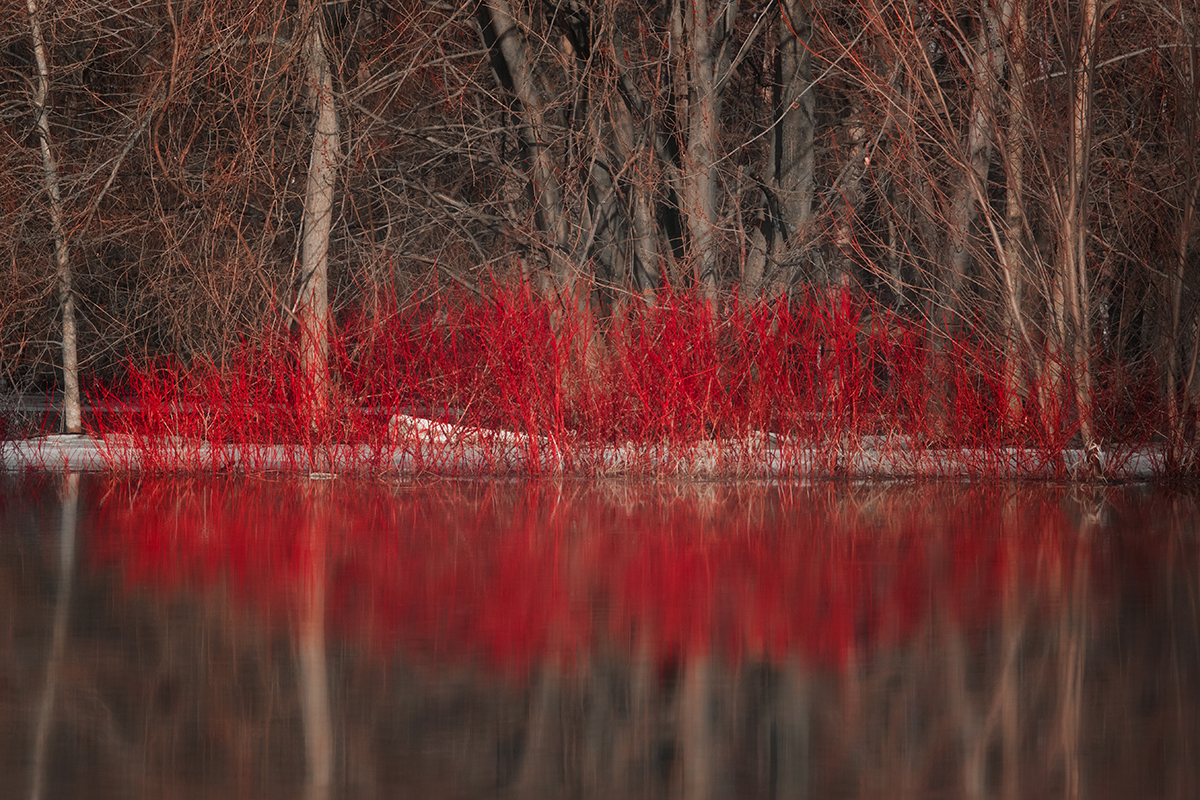
Shape & Stem: Striking and distinctive red stems.
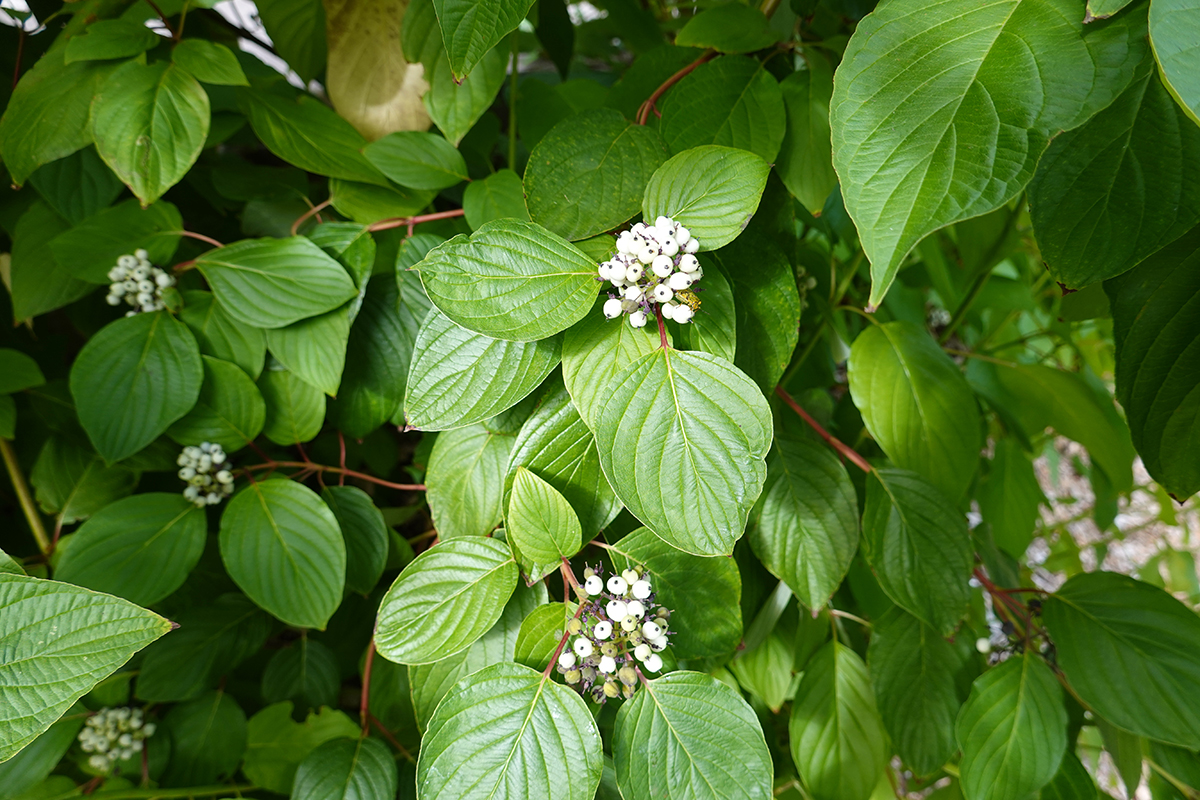
Leaf: Opposite, oval-shaped with smooth margins, 5-10 cm long, deep red in autumn. Leaves tend to be sharply pointed with 5 to 7 prominent, parallel veins that converge at leaf tips. A filmy white thread can be seen running through veins if a leaf is split crosswise and gently pulled apart.
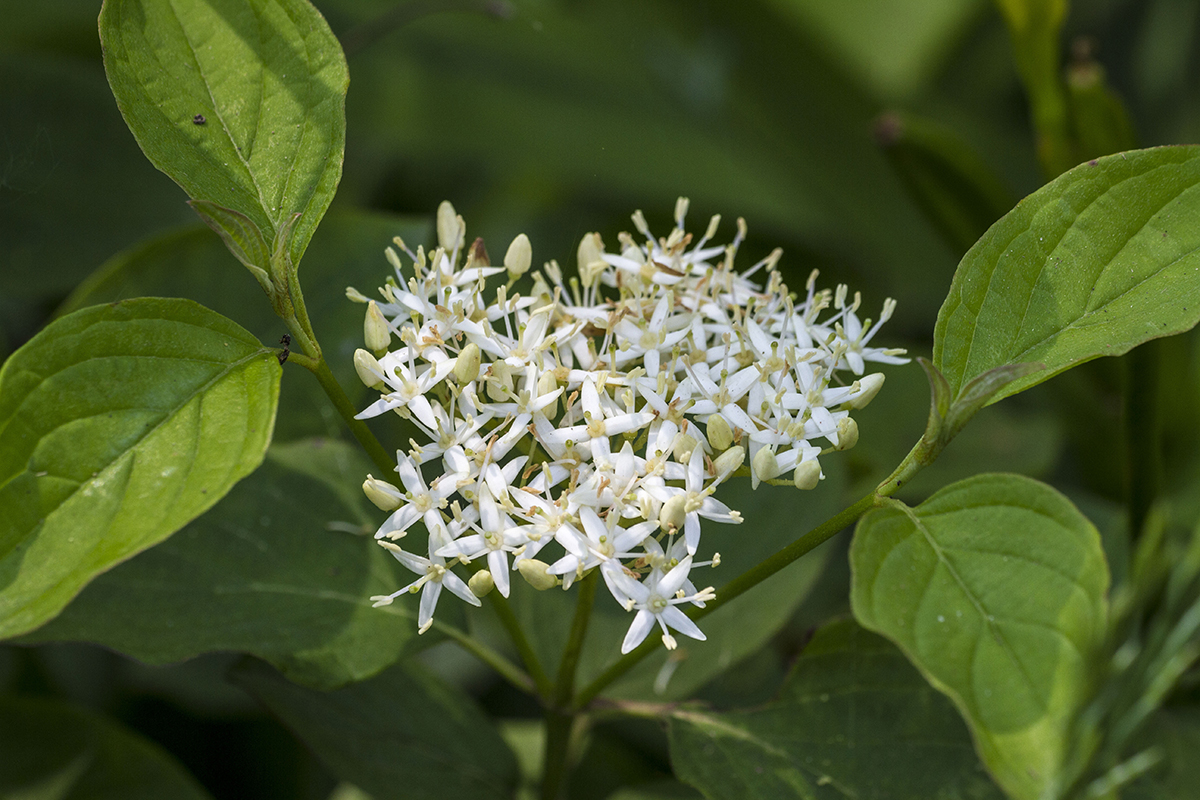
Flower: White to greenish, small (2-4 mm long) with 4 petals and 4 stamens. Numerous flowers in dense, flat-topped, terminal clusters.
Fruits: Small, white (occasionally blue-tinged) berry-like drupes, 7-9 mm long; each with a somewhat flattened stone; bitter and inedible.
Bloom: May – July
More Information
Maintenance & Pruning: Easily pruned back from many spreading stems.
Landscape Use: Perfect for informal hedges, bird and wildlife gardens, and erosion control on banks and slopes. Spacing from 1 to 2.5 m. This plant usually forms dense thickets and grows from extensive rhizomes. It provides wonderful winter interest with its red stems and white berries. Ideal for moist or boggy areas, such as the shores of lakes and ponds, or simply the wetter parts of conventional gardens. One of the most valuable native shrubs for habitat reclamation, wildlife cover, and other environmental plantings.
Propagation: It roots freely from lower branches that touch the ground. Propagate by dormant rhizome segments, stem cuttings, or seeds. From seed, cold stratification is required at 2-5 °C for 30-60 days. Cuttings also work well, with branch tips taken in late summer.
Pests, Animals & Diseases: The flowers are a good nectar source for pollinators like hummingbirds, bees, butterflies, and other insects; they are considered a ‘heavy hitter’ pollen and nectar source for native bees. The berries support small mammals and birds such as thrushes, robins, flickers, and pileated woodpeckers; the stems provide nesting and shelter for them too. Leaves and twigs are grazed by deer and elk.
Cultivars: Cornus stolonifera cv. ‘Flaviramea (yellow twigs) and cv. ‘Kelseyi’ (dwarf, up to 0.5 m).
Comments: This shrub is found across North America – from Alaska east to Newfoundland, to Durango and Nuevo León in the southwest, and to Illinois and Virginia in the east. This species is also known as C. sericea, especially in eastern North America. The variety west of the Coast and Cascade mountains is sometimes distinguished as C. stolonifera var. occidentalis or as C. occidentalis. C sericea thrives in moist, well-drained soils, particularly in riparian zones and wetlands, and also in areas with rich, poorly-drained soil.
Leave a Reply