

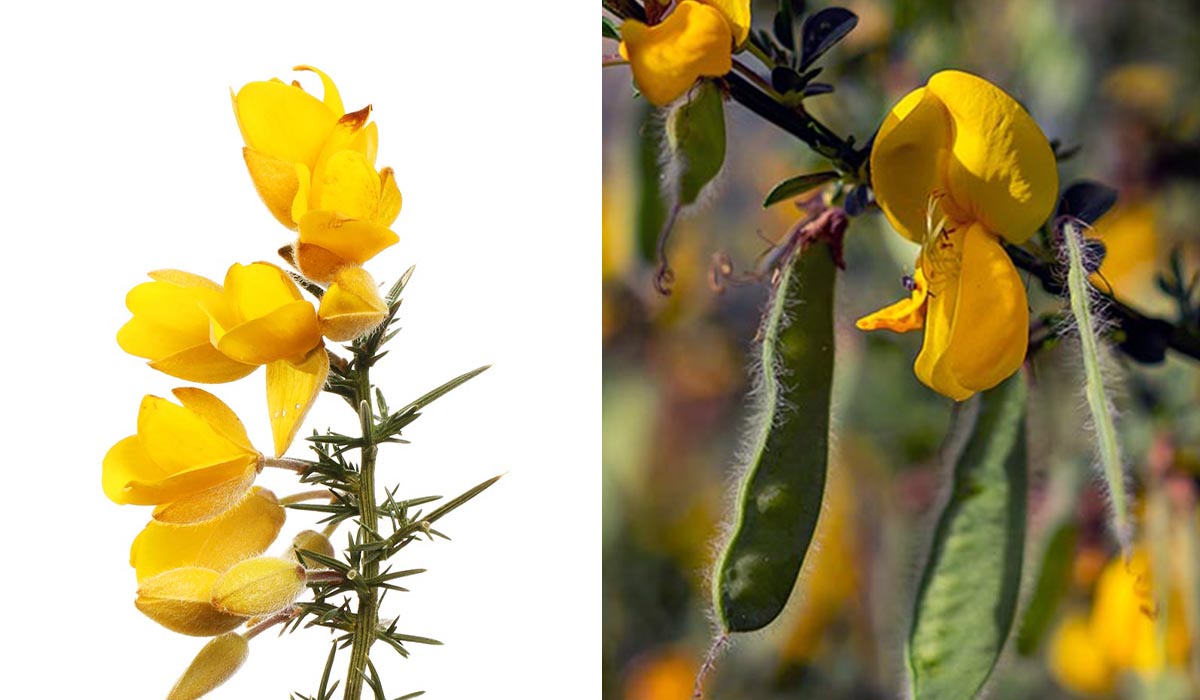
| Gorse (Ulex europaeus) | Broom (Cytisus scoparius) | |
|---|---|---|
| Spines | Distinctive sharp, spine-like leaves | Has small, non-spiny leaves |
| Lifespan | Can live up to 45 years | Typically lives 15-20 years |
| Fire Hazard | Contains volatile oils and creates a fire hazard | Contains volatile oils and creates a fire hazard |
| Invasiveness | Out-competes native species, reducing biodiversity and forage for wildlife | Out-competes native species, reducing biodiversity and forage for wildlife |
| Growth Habit | Can form dense thickets | Can form dense thickets |
| Height | 1-3m | 1-3m |
| Flowers | Bright yellow pea-like flowers | Bright yellow pea-like flowers |
| Seeds | Hairy seed-pods ripen from green to dark brown or black. Produces thousands of seeds which can remain viable up to 50 years. Mature seed-pods split and expel seeds up to 1 metre. | Hairy seed-pods ripen from green to dark brown or black. Produces thousands of seeds which can remain viable up to 50 years. Mature seed-pods split and expel seeds up to 5 metres. |
| Light | They out-compete native species in sunny locations, and prevent the growth of nearby plants by releasing toxins into the soil. | They out-compete native species in sunny locations, and prevent the growth of nearby plants by releasing toxins into the soil. |
Key Differences
- Spines: Gorse has spiny leaves, while broom does not
- Control: Gorse is generally more difficult to control than broom
- Lifespan: Gorse can live longer than broom
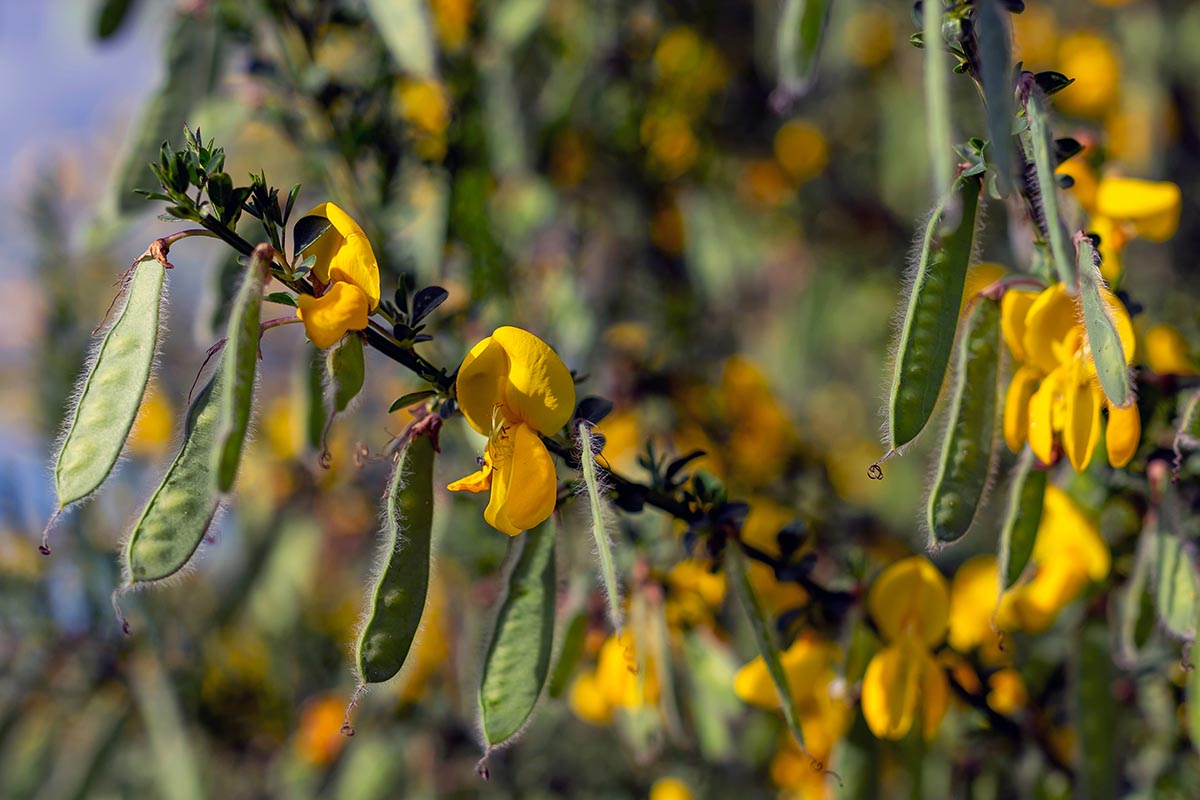
Broom Plant
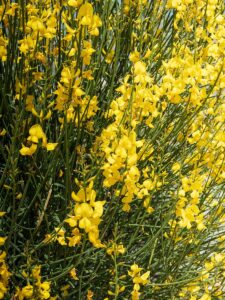
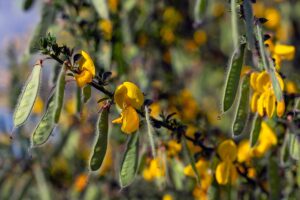
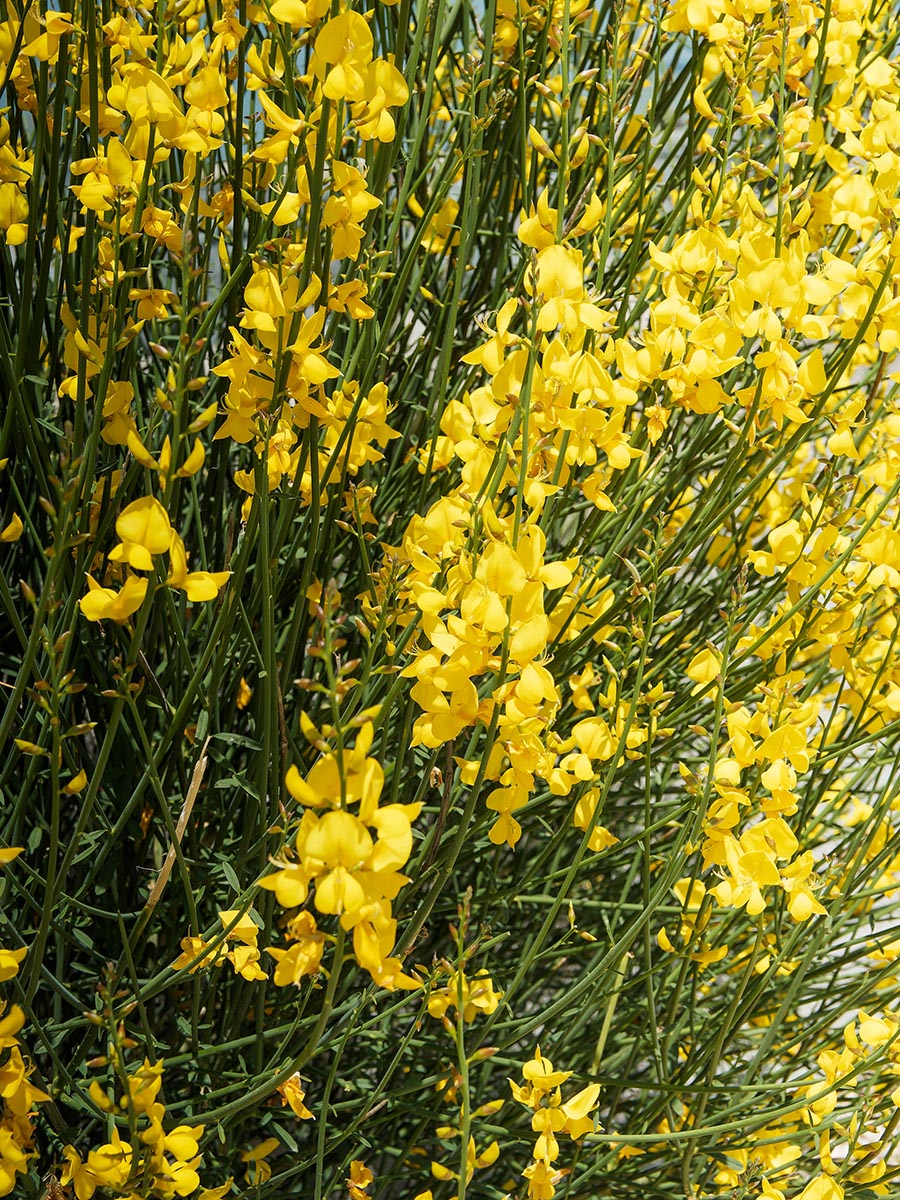
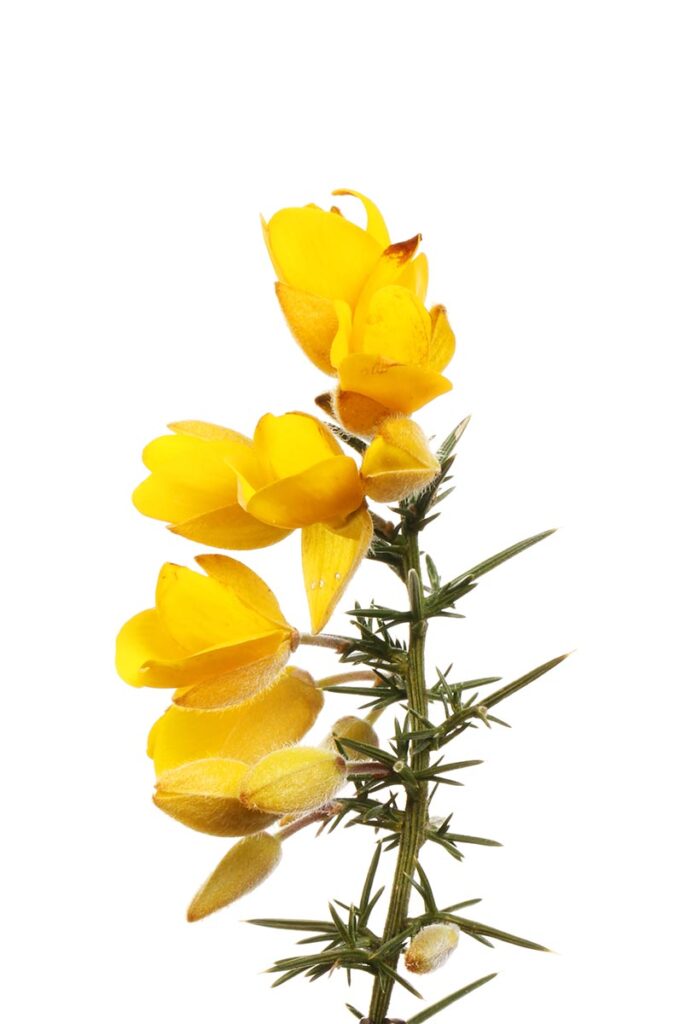
Flowers of the Gorse Plant
Removal
Stems thinner than a pencil can be pulled when the soil is wet. Infestations develop easily when soil is disturbed. To remove the plant without disturbing the soil, stand with one foot on either side of the plant, then pull it, and tamp the soil back into place. Larger plants and those growing on rock should be cut at or below ground surface with loppers or a pruning saw. To reduce re-growth, cut when it is blooming (before seed-set) or during a drought. For best results, promptly apply wood mulch, and re-vegetate with competitive grasses, alternative shrubs, or red alder. Monitor the area and repeat this process for at least 5 years. Grazing by goats can be effective in reducing infestations in pasture areas. Fire is sometimes used to control gorse, but plants can re-sprout, and seeds in the soil often germinate following a burn.
Disposal
Cuttings are extremely flammable, and large piles of them will leach toxins into the soil. Small amounts with no seeds can be scattered or piled in shady spots. Large amounts with no seeds can be chipped or taken to a goat farmer to use as feed. If seeds are present, avoid spreading them by putting cut or chipped material into strong bags or on tarps in securely covered loads, and take to the landfill.
Alternatives
Nootka Rose (Rosa nutkana), Tall Oregon Grape (Mahonia aquifolium), Dull Oregon Grape (Mahonia nervosa), Red Flowering Currant (Ribes sanguineum), Snowberry (Symphoricarpos albus), Mock Orange (Philadelphus lewsii), and California Lilac (Ceanothus).
The Removal and Disposal section of this article comes from an excellent and more detailed article by our Jean Wilkinson, found here: https://www.coastalisc.com/blog/broom-is-bad-and-gorse-is-worse-salt-spring-island-conservancy
Leave a Reply