

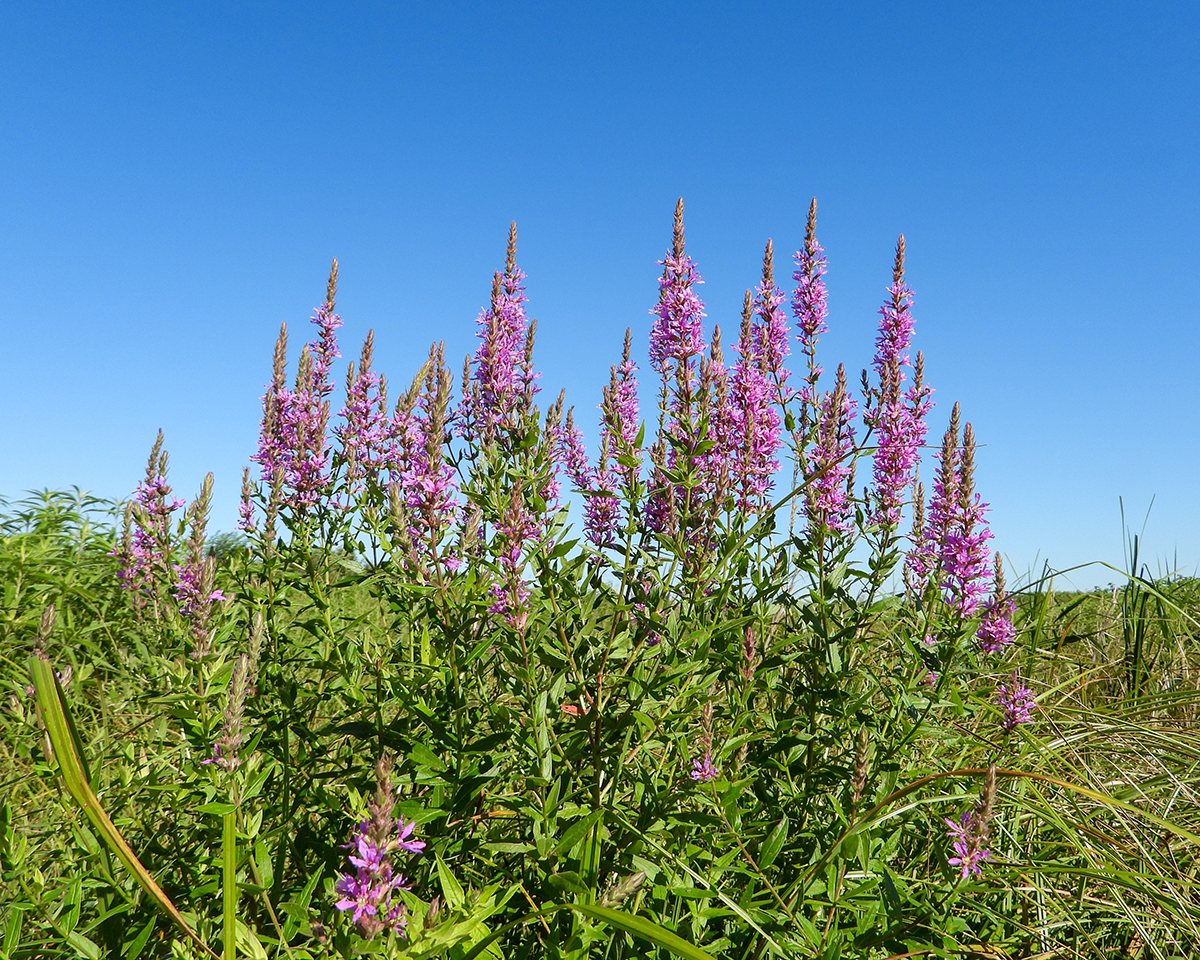
Purple loosestrife (Spike loosestrife, Purple lythrum) is a perennial plant introduced from its native range of Europe and Asia to BC in 1915. Purple loosestrife has a shrub-like appearance, with stiff, four-sided stems and narrow, stalkless leaves. The flowers grow in dense spikes and are a showy pinkish-purple. The plants can grow up to 3 m in height
The plant spreads rapidly by seed and root fragments. The tiny seeds are dispersed by wind, mud, moving water, wildlife and humans. A mature plant can produce up to 2.5 million seeds that can survive in the soil for up to 20 years. Purple loosestrife grows in wetlands and aquatic habitats, as well in wet pastures and roadside ditches and is quite easily recognized by its flowers.
Purple loosestrife is designated as a Provincial Noxious Weed by the BC Weed Control Act, as well as a Management species by the BC Provincial Priority Invasive Species List. Some patches of purple loosestrife have been spotted on Salt Spring Island. It is also of concern in Eastern Canada for its ability to spread into local wetlands. Purple loosestrife is often confused with the native plant fireweed.
Removal
Before transporting to a disposal site, bag or use a tarp for the removed plant parts.
Mechanical Control
Small infestations, if caught early, can be removed by hand by pulling or digging. Purple loosestrife reproduces through fragmentation so special attention must be paid to ensure all plant parts are removed. This method should be applied before seed set to prevent scattering. Mechanical control for large infestations has been unsuccessful. ☹
Biological Control
The root boring beetle (Hylobius transversovittatus) and two species of leaf eating beetles, Galerucella calmariensis and Galerucaella pusilla have been proven effective against purple loosestrife. These beetles damage the root system, stunt growth and reduce seed production of the plant.
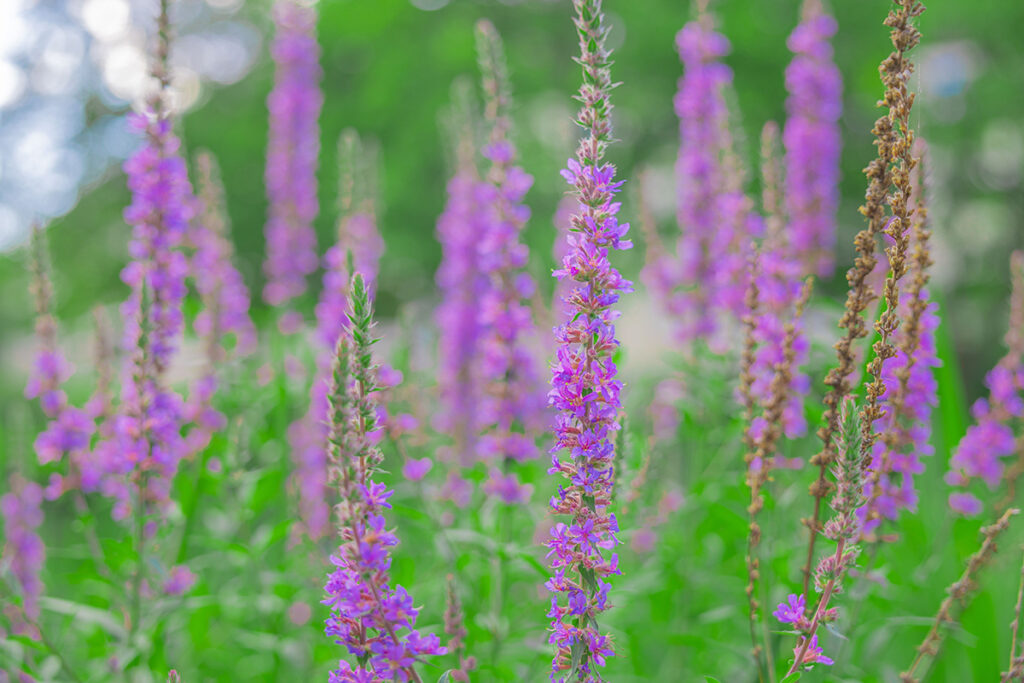
Plant These Instead
A few non-invasive alternatives to plant instead of Purple loosestrife include:
Fireweed- Chamaenerion (formerly Epilobium) angustifolium
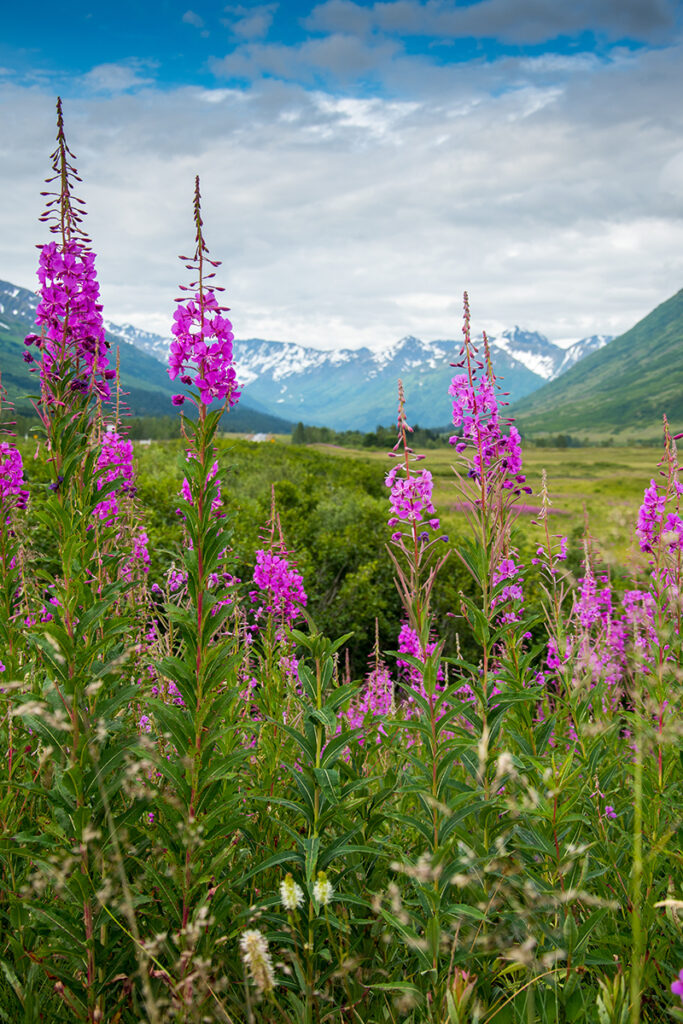
Fireweed was given its common name due to its ecological role as a pioneering species after fires, typically associated with the north. In favourable growing conditions, it can have a height of 0.8-3m tall! With its distinctive rose/purple/fuschia flowers in clusters of 15 or more up the stalk, these flowers spread by seed and rhizome. Preferring moist soils but tolerant of fairly dry disturbed areas, this plant is found outside the garden in meadows, thickets, avalanche tracks and along roadsides. In the garden, they may need staking as they can flop or plant them in drier sites and poorer soils to limit their spread. Its flowers attract pollinators and other insects, while its seeds attract birds.
Large-leaved lupine (Lupinus polyphyllus)
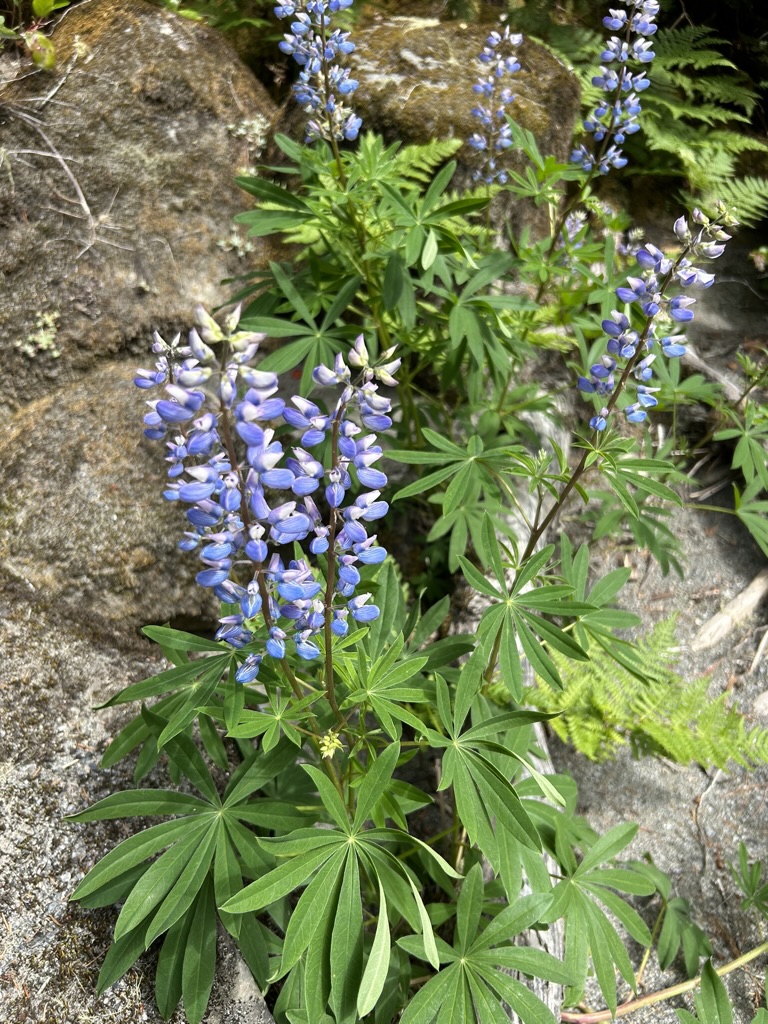
This tall and beautiful lupine can reach heights of 1.5 m! Large-leaved lupines are a great plant to grow in infertile soils, as they add nutrients back into the soil. This plant produces tall spikes of deep blue to purple pea-shaped flowers, blooming in late spring. The flowers turn into woolly brown pods containing seeds. Large-leaves lupine add incredible architectural interest to the garden. These seeds are toxic to humans and livestock when raw.
Blazing star (Liatris spicata)
Blazing star is a fantastic garden perennial with feathery, fluffy white (or purple) spikes of flowers growing up to 1.3 m tall. Shiny grass like foliage adds to the visual interest of this plant. A prairie species, Blazing star tolerates a range of environmental conditions, so it is quite low-maintenance in the garden, provided it is planted in well-drained soil. Blazing star is an excellent plant to include in the garden due to its attractiveness to pollinators like hummingbirds and bees.
Hardtack (Spiraea douglasii)
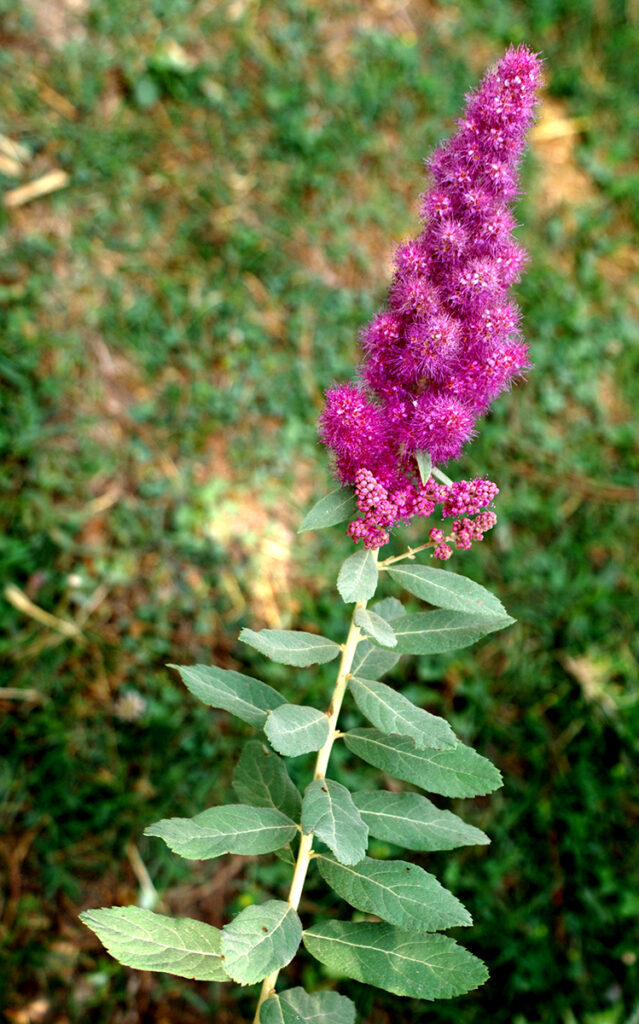
Hardhack is a native shrub ranging from 0.5 to 2.5 m in height, recognizable by its conical arrangements of densely packed pink flowers extending above branches covered with upright growing oval leaves in the summer. Hardhack is found growing in consistently moist soils such as swamps, bogs, and beside waterbodies like creeks and rivers. Bees love hardhack flowers, so this is a great species to plant to attract pollinators.
Other Alternatives
- Henderson’s checkermallow (native)
- Yellow loosestrife (non-native)
Leave a Reply