White Fawn Lily
Perennial Spring Ephemeral
Common Names: White Fawn Lily, Giant Fawn Lily, Oregon Fawn Lily
Species: Erythronium oreganum
Family: Liliacae
Zone: 3-9
BEC Zones: CDF, CWH, ESSF
Height: up to 30 cm
Width: 10-13 cm
Conditions
Sun: Part shade.
Soil: Humus that is rich in leaf mold.
Moisture: Moderately dry to moist; well-drained.
Exposure: Well-drained; found anywhere between open areas, to fairly dense and shaded woodlands, or grasslands at low elevations in Washington, Oregon and South Western British Columbia.
Appearance
Shape & Stem: Perennial herb up to 30 cm tall.
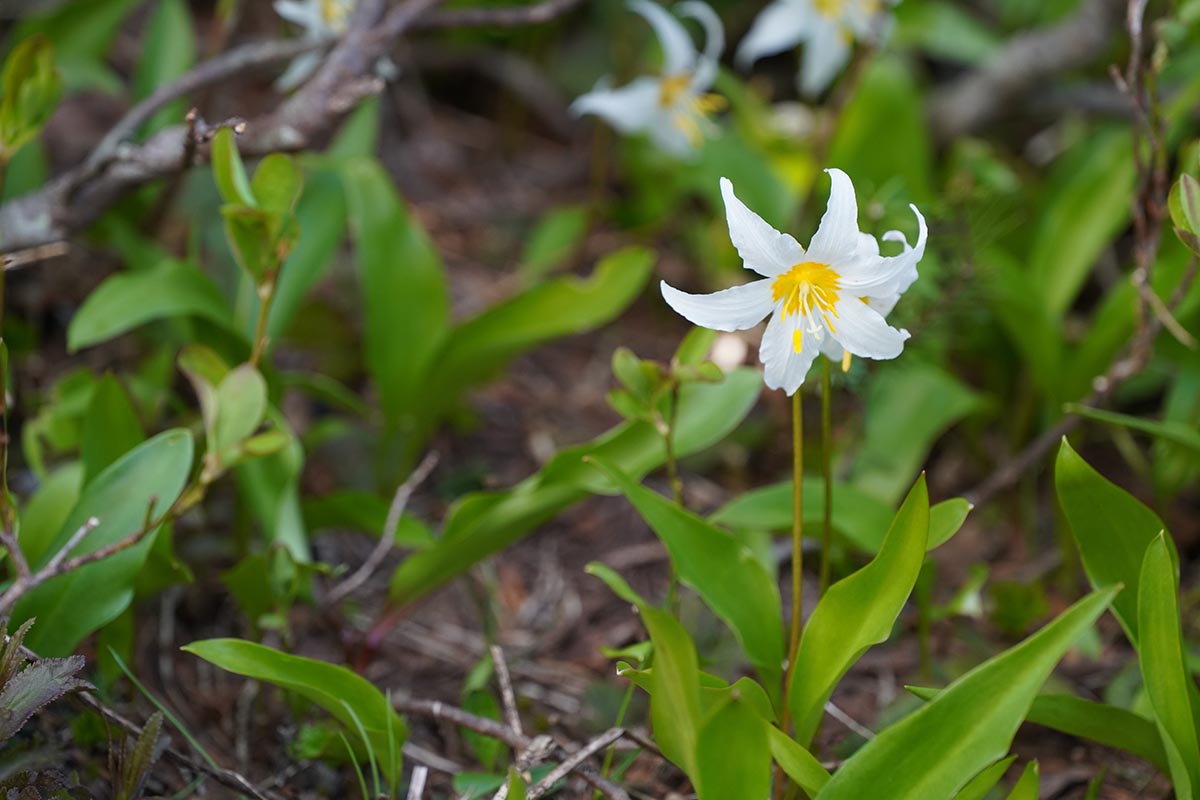
Leaf: Basal, paired, lance-shaped to oblong, up to 20 cm long, mottled with pale green and dark brown colouring.
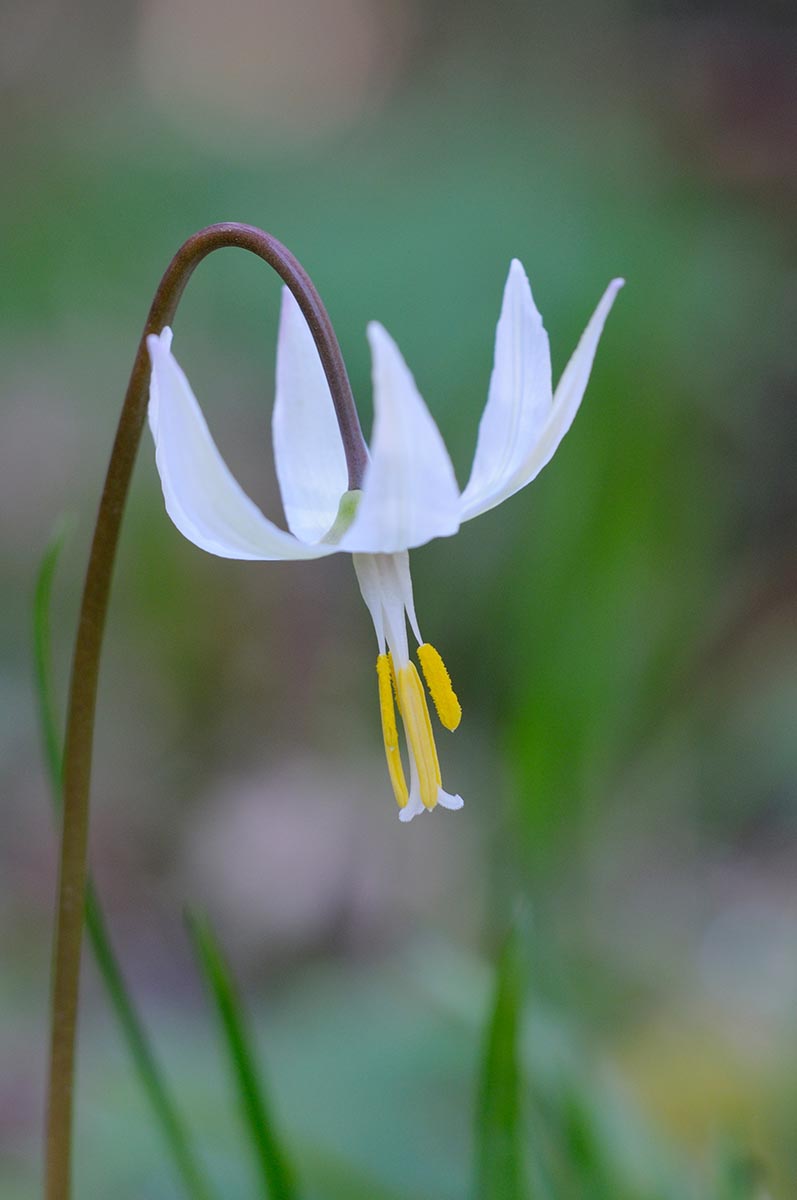
Flower: White (often marked with orange-yellow at the base), the sepals bent back, usually single, terminal, nodding. Open, lily-like flowers, nodding, 7 cm across; one flower per stem, and up to 3 flowers per plant.
Fruits: Erect, broadly club-shaped capsules 3-4 cm long, notched near the tip.
Bloom: April
More Information
Maintenance & Pruning: Plant 10 cm deep. Very low-maintenance plant.
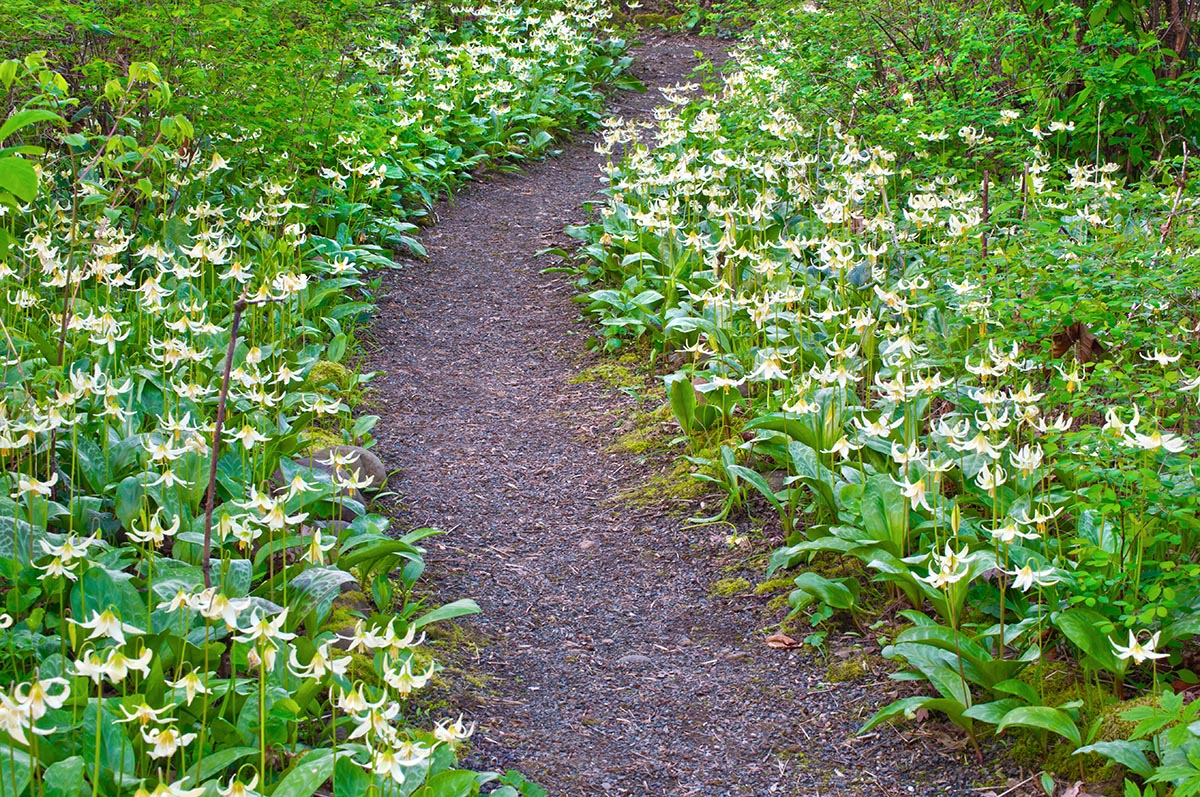
Landscape Use: Woodland gardens, cottage gardens, rock gardens, underplanting roses or shrubs. When allowed to self-sow, they form spectacular drifts of blooms, with striking mottled foliage. A spring ephemeral whose foliage disappears by early summer, when the plant goes dormant. Highly ornamental, easy to grow and trouble-free. An attractive groundcover in the shade garden. Lovely in groups under deciduous trees or shrubs.
Propagation: Propagate by seed or division after flowering. Erythronium species have a bulb with only one scale, and a segmented corm made of round annual segments, just like a string of beads. The bulbs of flowering specimens are usually at least 10 cm deep, moving deeper with age. Plants germinated from seed won’t bloom until their fourth or fifth year.
Pests, Animals & Diseases: No serious pests or diseases. Keep an eye out for slugs.
Related Species: Lowland species such as Pink Fawn Lily (E. revolutum), confined to southern Vancouver Island, and White Fawn Lily, have adapted best. Found in high mountain meadows: White Avalanche Lily (E. montanum), Yellow Avalanche Lily (E. grandiflorum) have plain, pale-green leaves and do not adapt well to garden culture.
Comments: It is likely the ‘fawn’ refers to the mottled leaf colouring.
Leave a Reply