
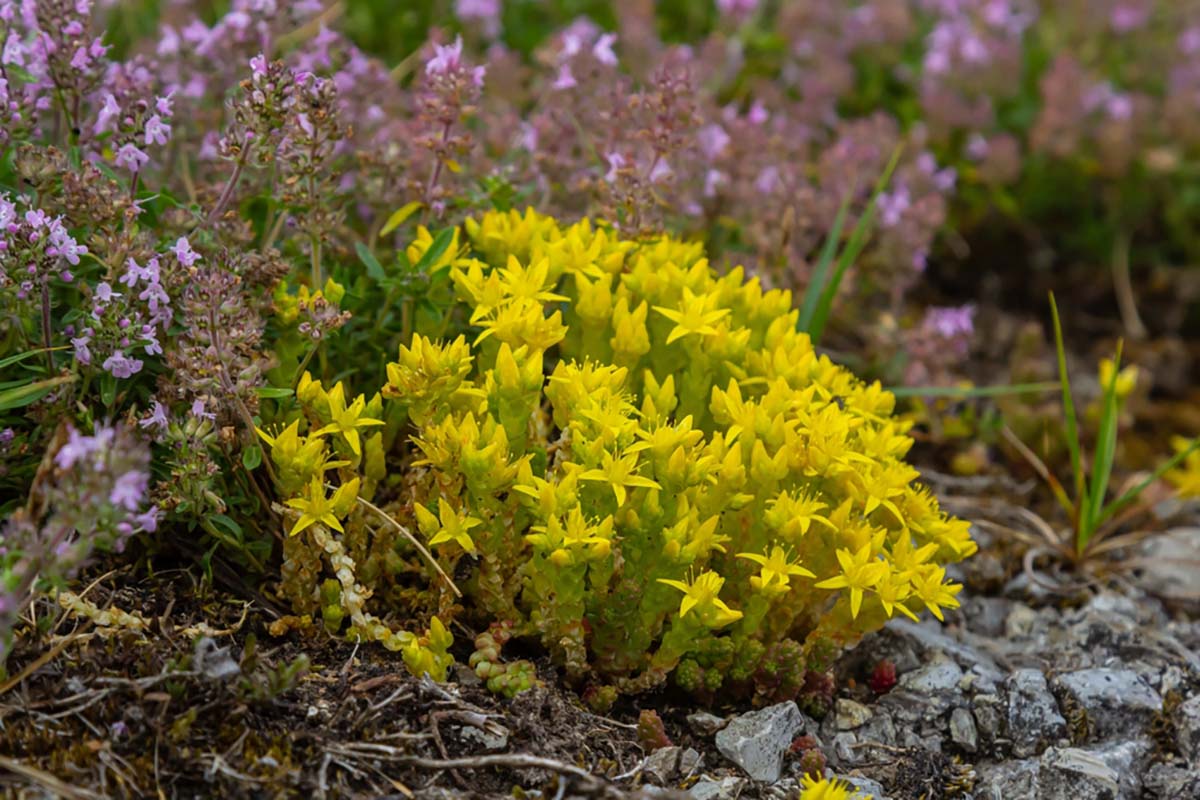
I’m giving this invasive sedum the spotlight this month, since it appeared in my garden with no invitation from me whatsoever! I watched it spread slowly but steadily across two beds, before removing it and sending it to the purgatory of my weed compost pile. Since it spreads easily by cuttings, I will keep a sharp eye on it to make sure it does not root and revive itself. Goldmoss stonecrop (also known as Biting stonecrop) is a rapidly spreading and low-growing succulent native to Europe that was popular for rock and xeriscape gardens. It is occasionally used on green rooftops for its ability to withstand extreme temperatures and drought.
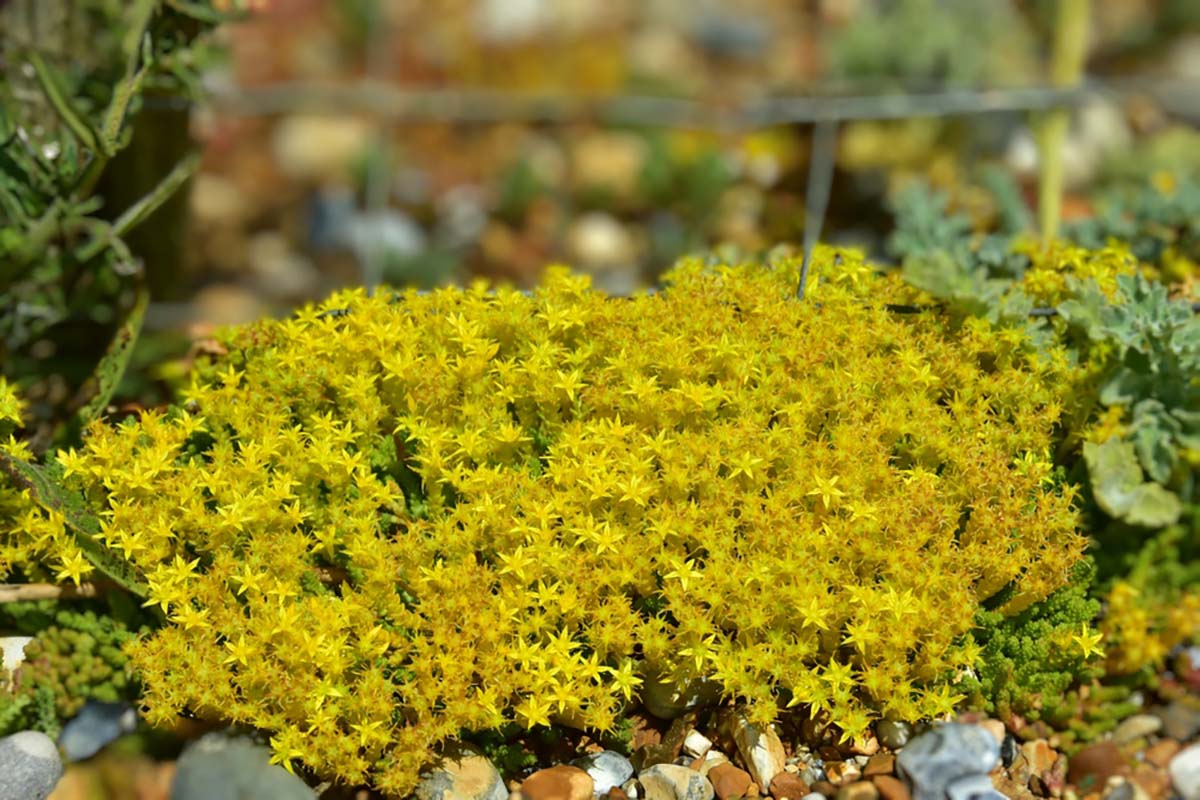
Its leaves and stalks are fleshy and numerous and vary in shape from triangular to needle-like. It blooms from July to September with masses of small, 5-petaled, star-shaped yellow-to-green flowers. Both leaves and flowers form mounds of green or gold, with a carpet-like appearance from afar.
Goldmoss stonecrop grows from seed and vegetatively: a single leaf can root and become a new plant! This enables it to grow aggressively and overtake other plants. Removal is achieved with the simple act of digging up the shallow plant roots while being careful to remove and dispose of every piece. Unfortunately, despite being listed as an “invasive plant to be aware of” by the Invasive Species Council of B.C., Goldmoss stonecrop is still widely available at local garden centres.
Alternatives
Luckily, there are wonderful, non-aggressive native species that can be planted instead! The flowers of these 3 sedums are very similar in size, shape, and colour to those of Goldmoss stonecrop. However, unlike the Goldmoss stonecrop, the leaves of the native Sedum spp all have glaucous or whitish, waxy coatings.
Broadleaf stonecrop (Sedum spathulifolium)
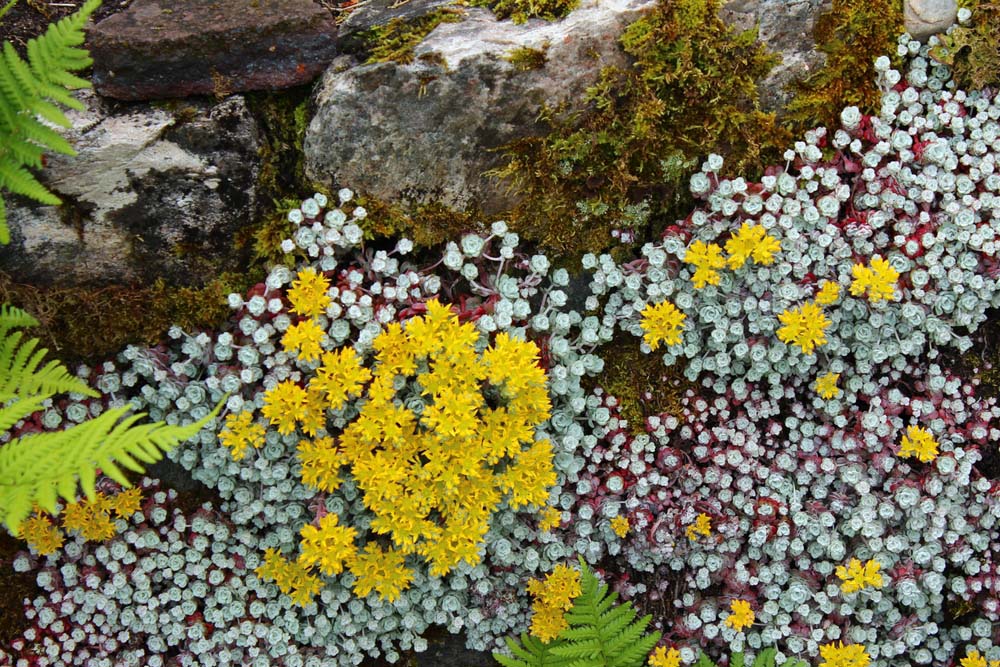
Broadleaf stonecrop leaves are dusty sage-green, reddish in full sun, with the leaf surface covered in a white waxy powder (2 cm long and 1 cm wide). Grows on rocky outcrops, cliffs, coastal bluffs, and forest openings on coarse soils. Commonly found on SSI along shoreline cliffs in full or part sun.
Oregon stonecrop (Sedum oreganum)
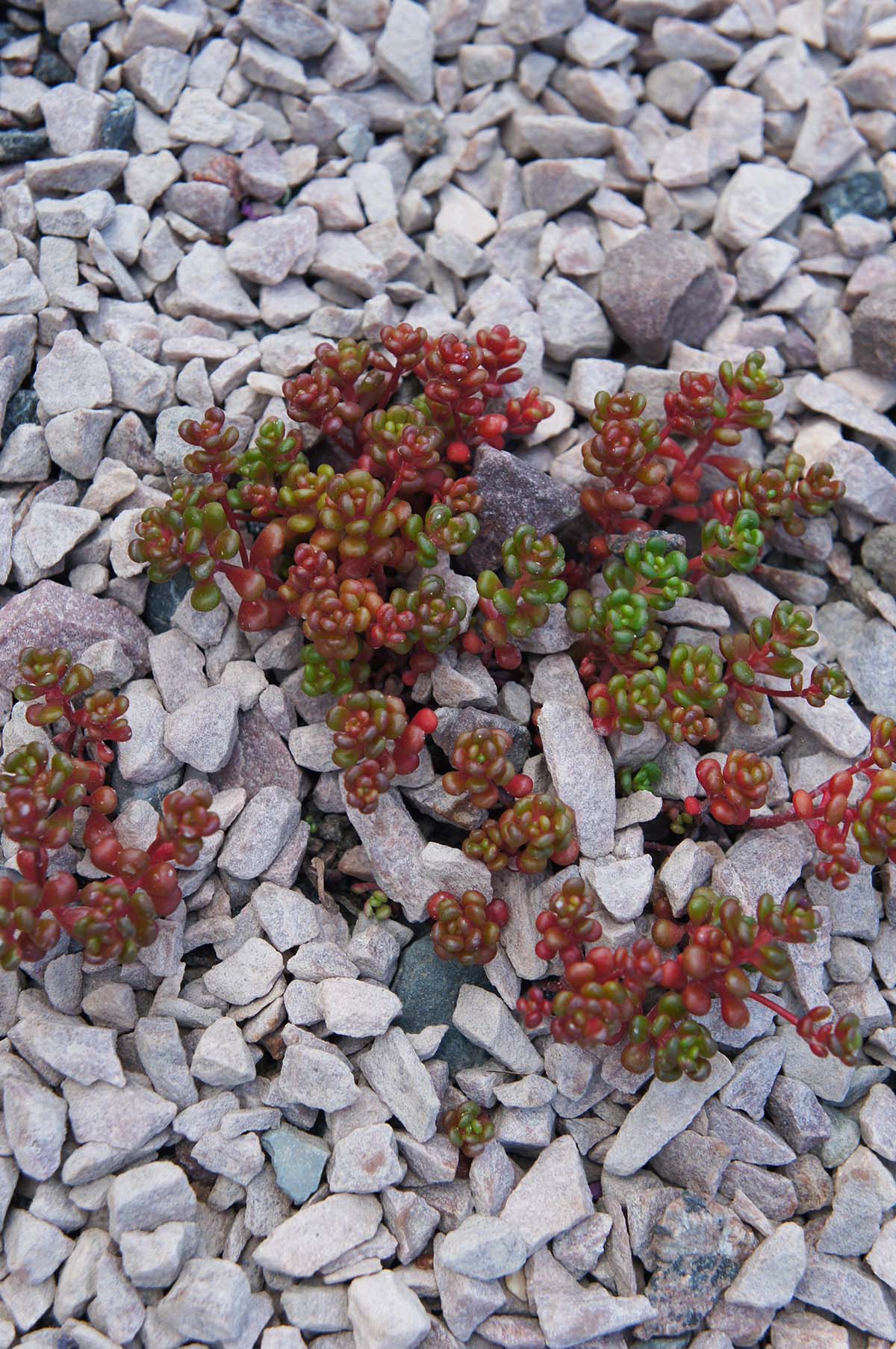
Oregon stonecrop (Sedum oreganum) leaves are egg-to-spoon-shaped with rounded edges (up to 2.5cm long), and somewhat flattened but quite fleshy. Green leaves become bronze and somewhat glaucous (whitish from a fine, waxy powder). Grows on rock ledges, rocky ridges, and talus slopes; often along forest edges.
Lance-leaved Stonecrop (Sedum lanceolatum)
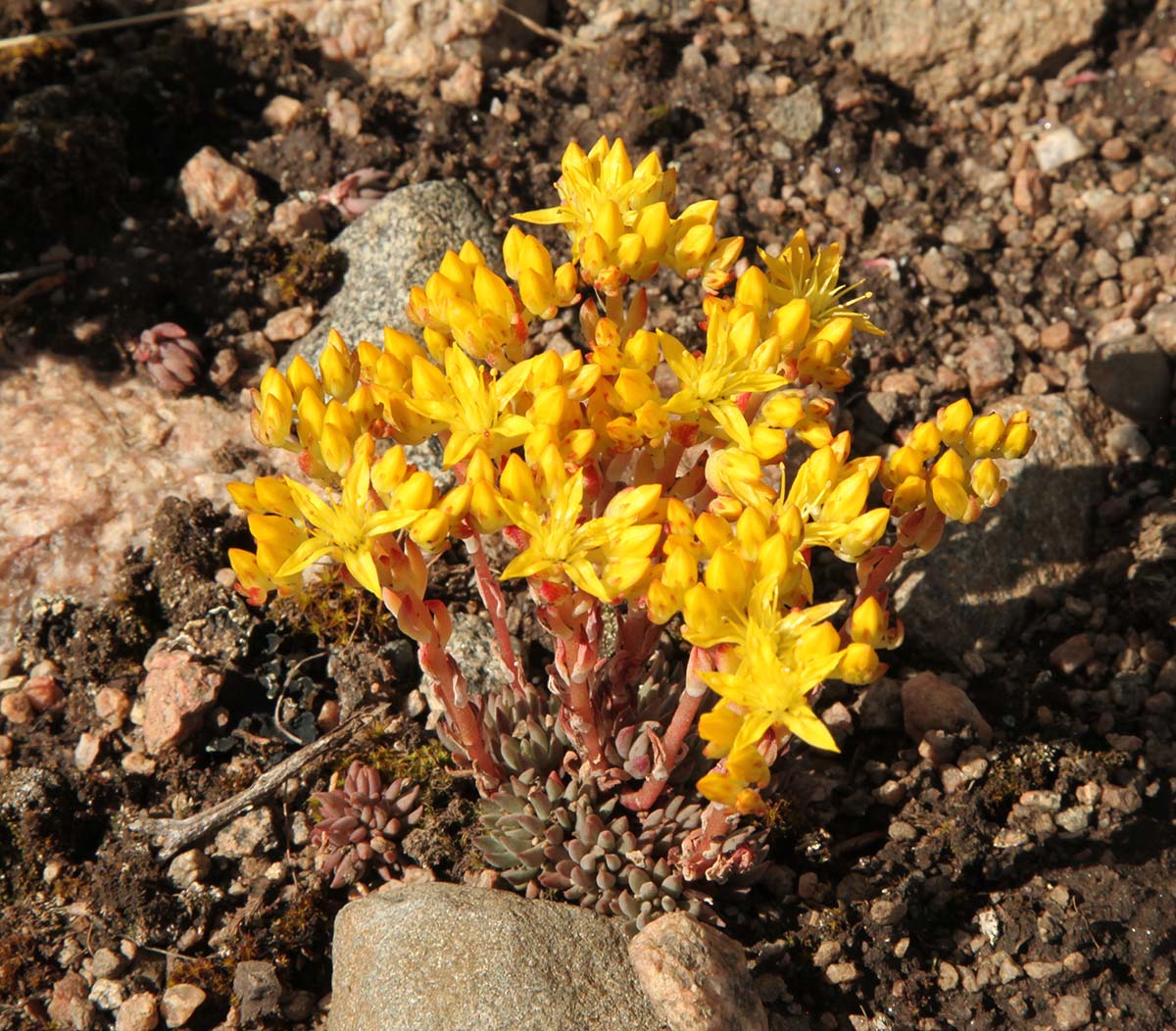
Lance-leaved Stonecrop leaves are narrowly lance-shaped to elliptic, rounded in cross-section, and fleshy. Leaves are most thick near the base and crowded on sterile shoots. The stem leaves are sometimes covered with a white-waxy powder, and tend to drop off before the plant flowers. The basal leaves often turn bronze in autumn. Found on dry-to-moist, rocky, open sites.
Leave a Reply