
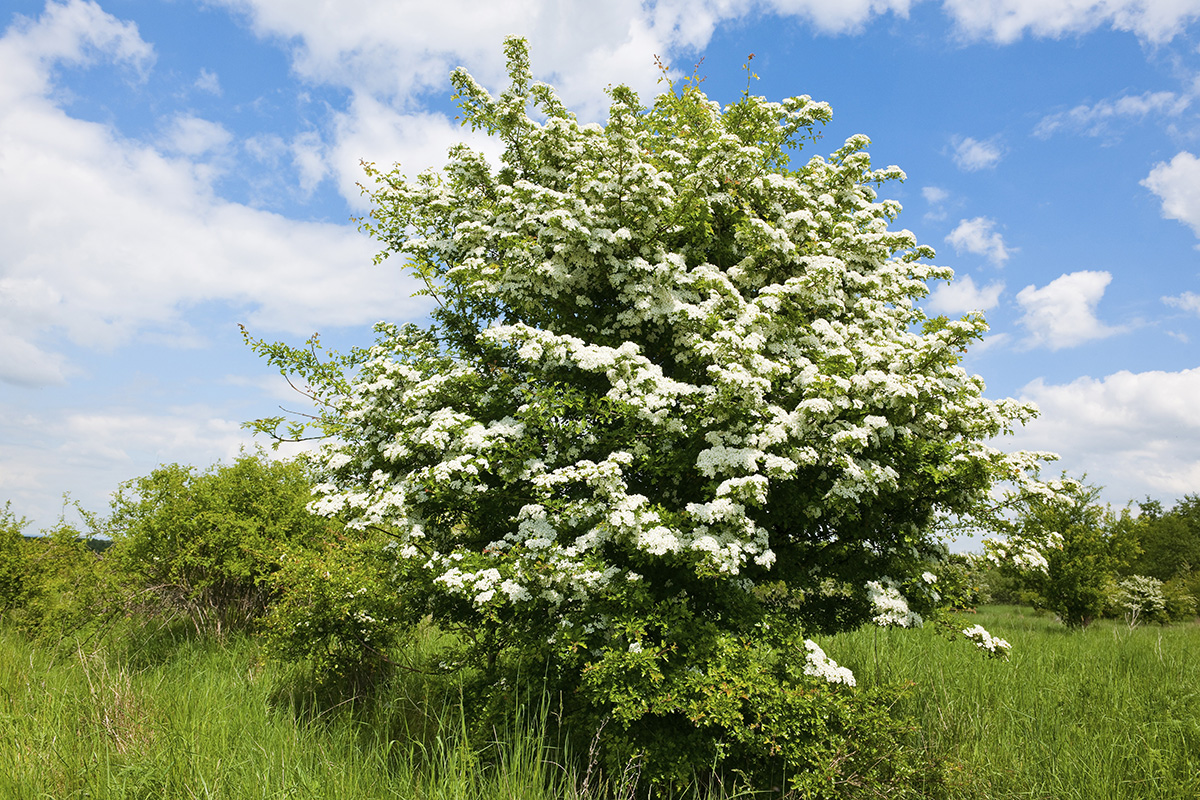
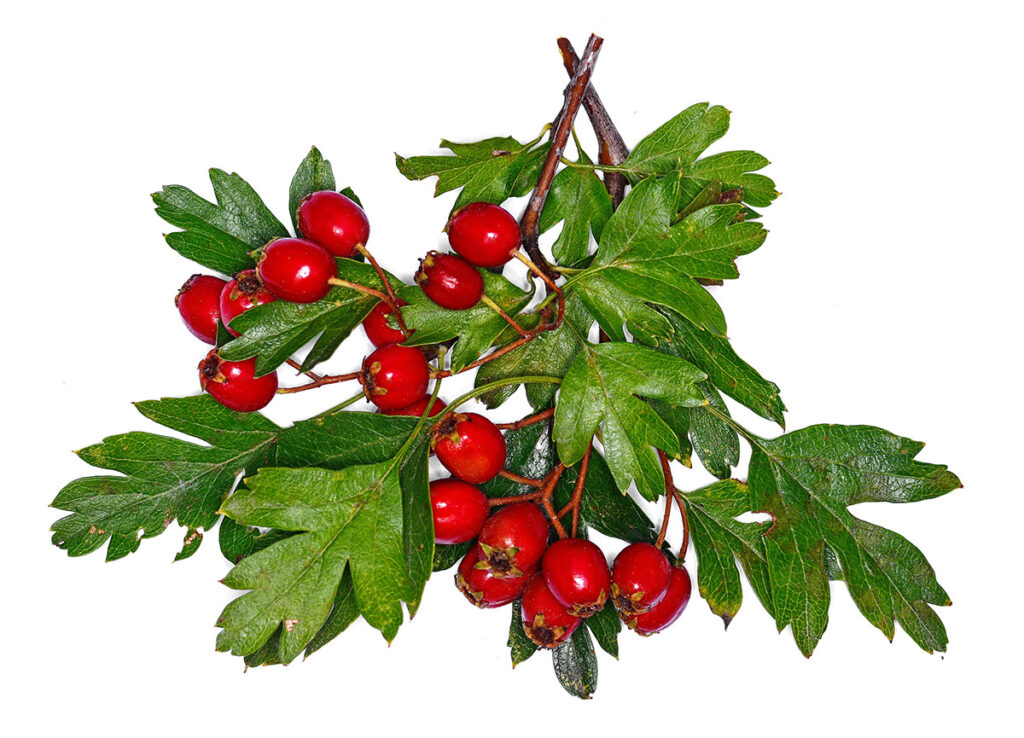
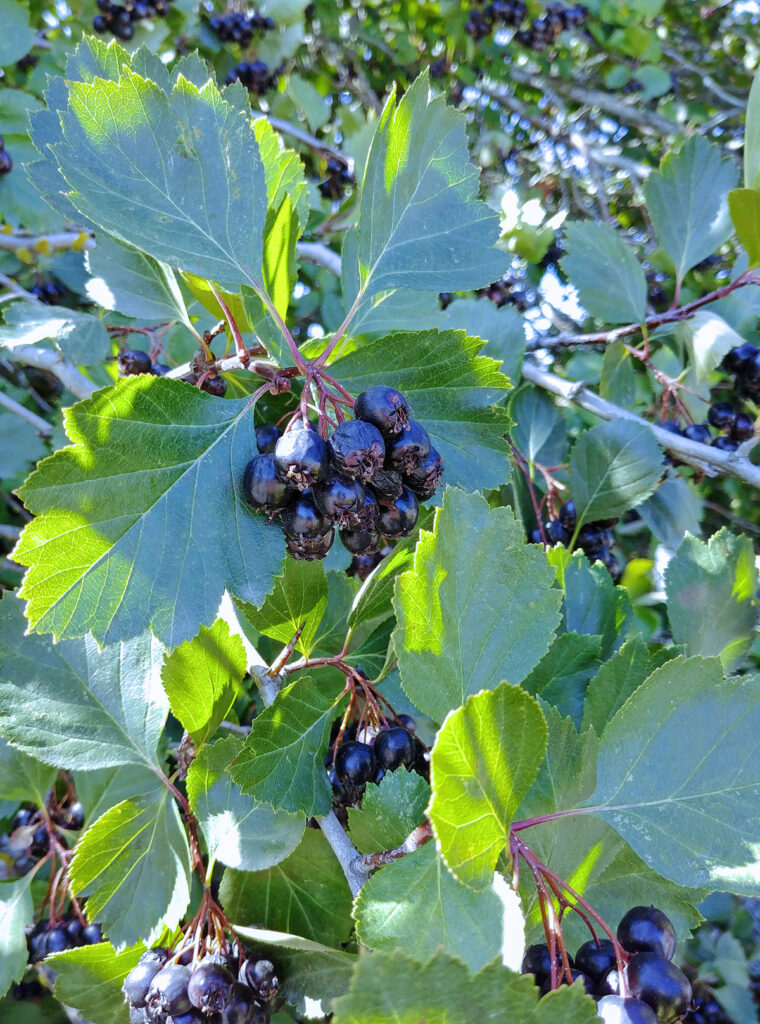
English hawthorn was once used to create hedgerows to contain livestock but now invades pastures and grasslands. It is a deciduous bushy, prickly shrub or small tree with white, scented blossoms and deep red berries, found throughout Salt Spring Island and southern Vancouver Island. It forms large hedgerows in the Fulford valley by Burgoyne Bay. The hawthorn native to this region, Black hawthorn (Crataegus douglasii), is very similar in appearance and not easily distinguishable from the invasive alien English hawthorn. The main difference between them lies in their bloom time and leaf appearance. Learn more about their differences in the table and photos below.
| English Hawthorn, Common hawthorn, Oneseed hawthorn, May tree (Crataegus monogyna) | Black Hawthorn, Blackthorn (Crataegus douglasii) | |
|---|---|---|
| Blossoms | Flowers appear after the leaves emerge, May to June. | Flowers appear before the leaves, May to June. |
| Leaves | Shiny, deeply lobed, and appear before the flowers. | Oval, finely toothed, and appear after the flowers. |
| Bark | Lighter bark (creamy brown) and rougher with knots and fissures. | Darker bark. |
| Fruits | Small, round, red or orange, berries. | Small, round, blue-black berries. |
| Height | Up to 10 meters tall. | Up to 10 meters tall. |
| Habitat | Moist soil, such as woodlands, grasslands, and riparian areas. | Moist soil, such as woodland, grasslands, and riparian areas. |
Impacts to the Garry oak ecosystem
In Garry oak ecosystems with deep soil, English hawthorn can replace open grassland habitat with a dense shrub and small tree layer, dramatically changing the composition of the plant community. By preventing light from reaching the ground, they eliminate native plants and reduce food and habitat for native birds, insects and other animals. They may also harbour non-native mammals such as rabbits.
Once established, English hawthorn can be very persistent. It has been known to hybridise with the native black hawthorn (C. douglasii), altering the gene pool.
Removal of English Hawthorn
- Since English hawthorn is covered in thorns, ensure you are wearing proper protective clothing and gloves.
- Removal is most effective when plants are immature and small; seedlings can be hand-pulled.
- Dig up roots and remove any cut fragments as these can re-sprout; this plant also spreads vegetatively.
- This plant will produce berries after ten years, and these seeds can be spread by birds, animals, soil, and water.
Alternatives to English Hawthorn
- Black Hawthorn
- Pacific Ninebark
- Pacific Crabapple
- Saskatoon Berry
Leave a Reply